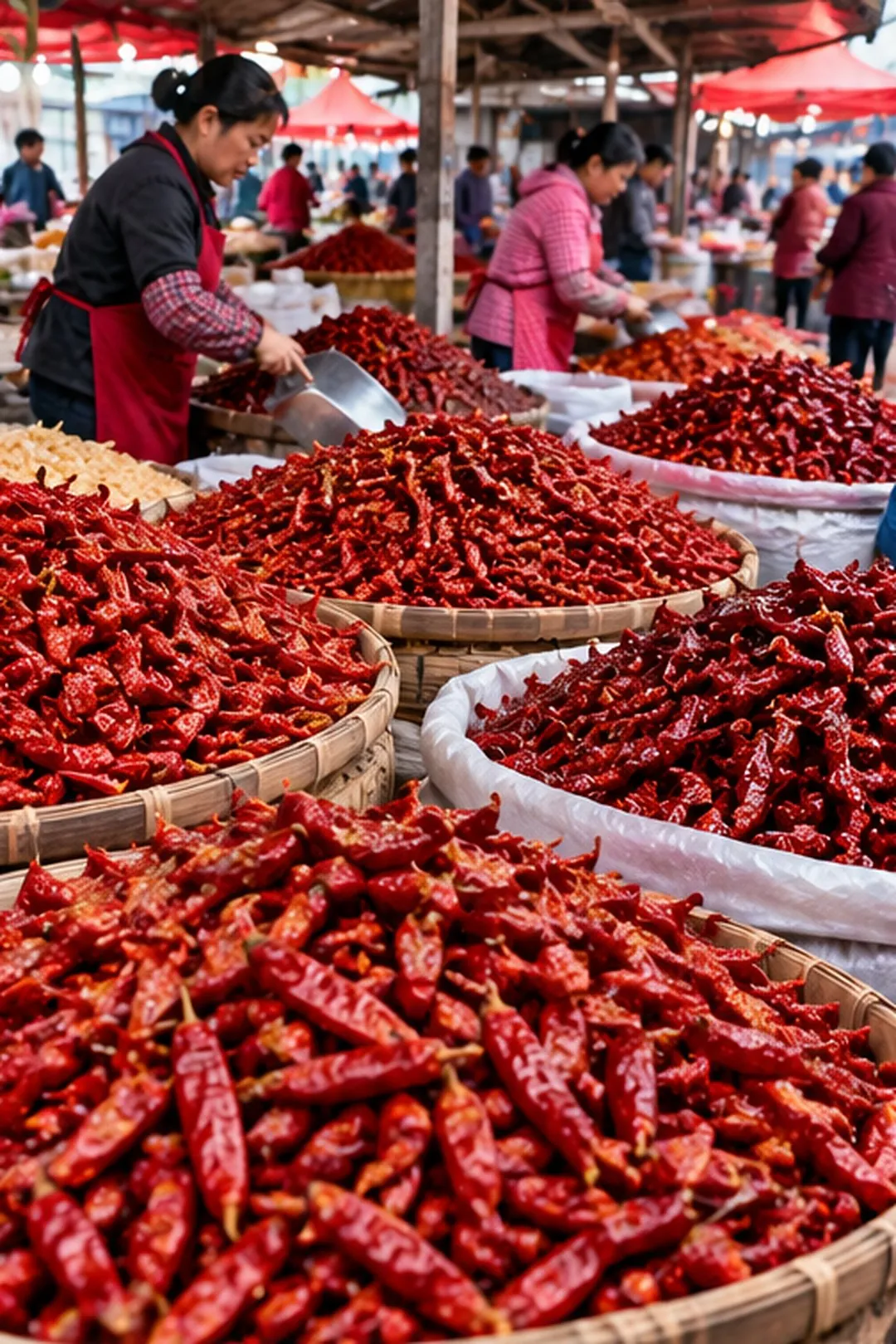
The Rice Map of China
A "Weed" with an Annual Yield Exceeding 210 Million Tons
Rice, the most common staple food in China, together with wheat introduced from the Western Regions, forms the basic pattern of "rice in the south and wheat in the north" on Chinese dining tables.
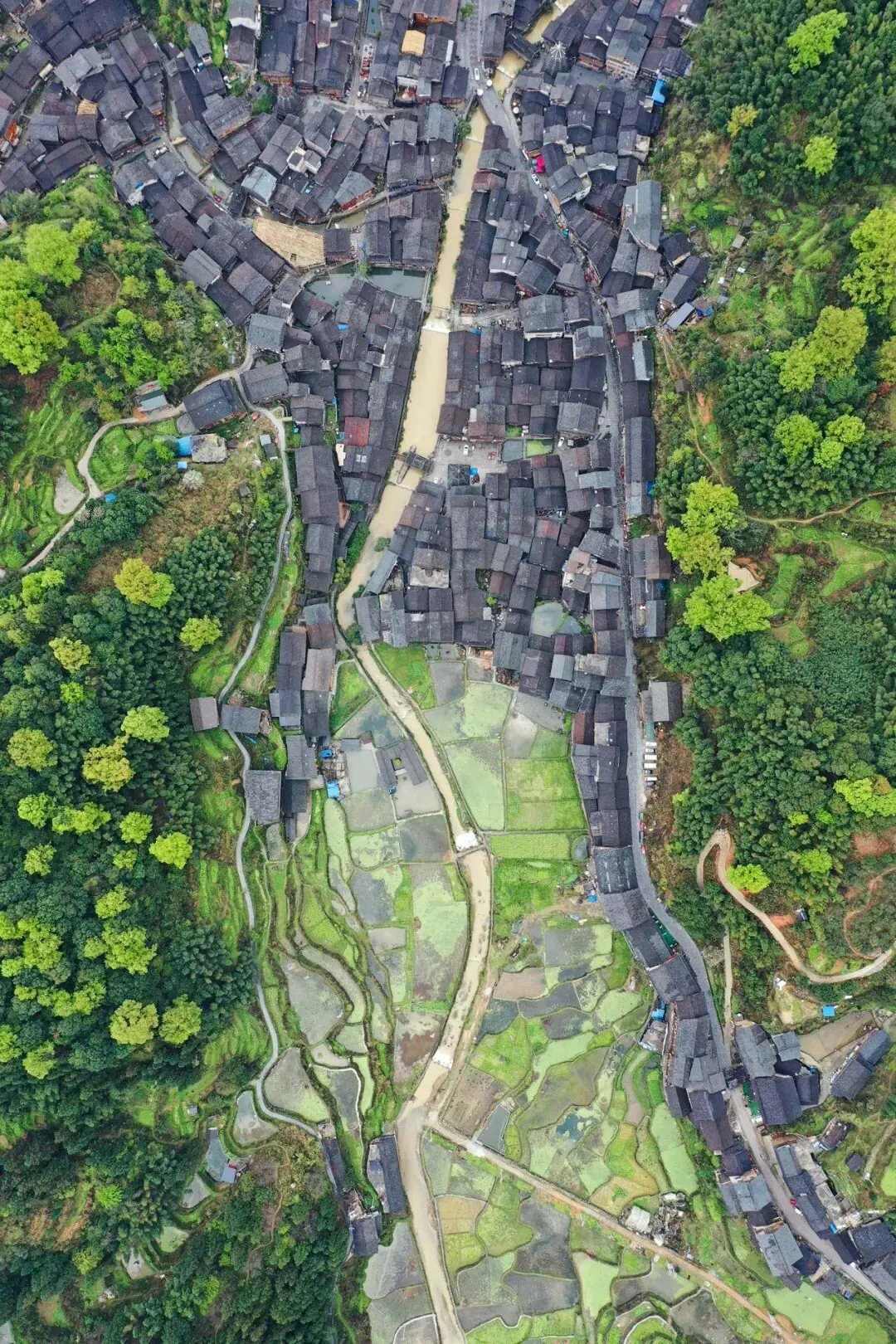
▲ Domesticated rice. Photo by Fu Ding
As a native crop, rice embodies the spirit of "benefiting all under heaven when successful" due to the efforts of the nation. In 1964, Academician Yuan Longping initiated China's hybrid rice research. Today, thanks to generations of farmers, China has developed over 7,000 hybrid rice varieties, increasing grain production by nearly 900 million tons. Chinese hybrid rice has also gone global, being trialed or promoted in more than 60 countries.
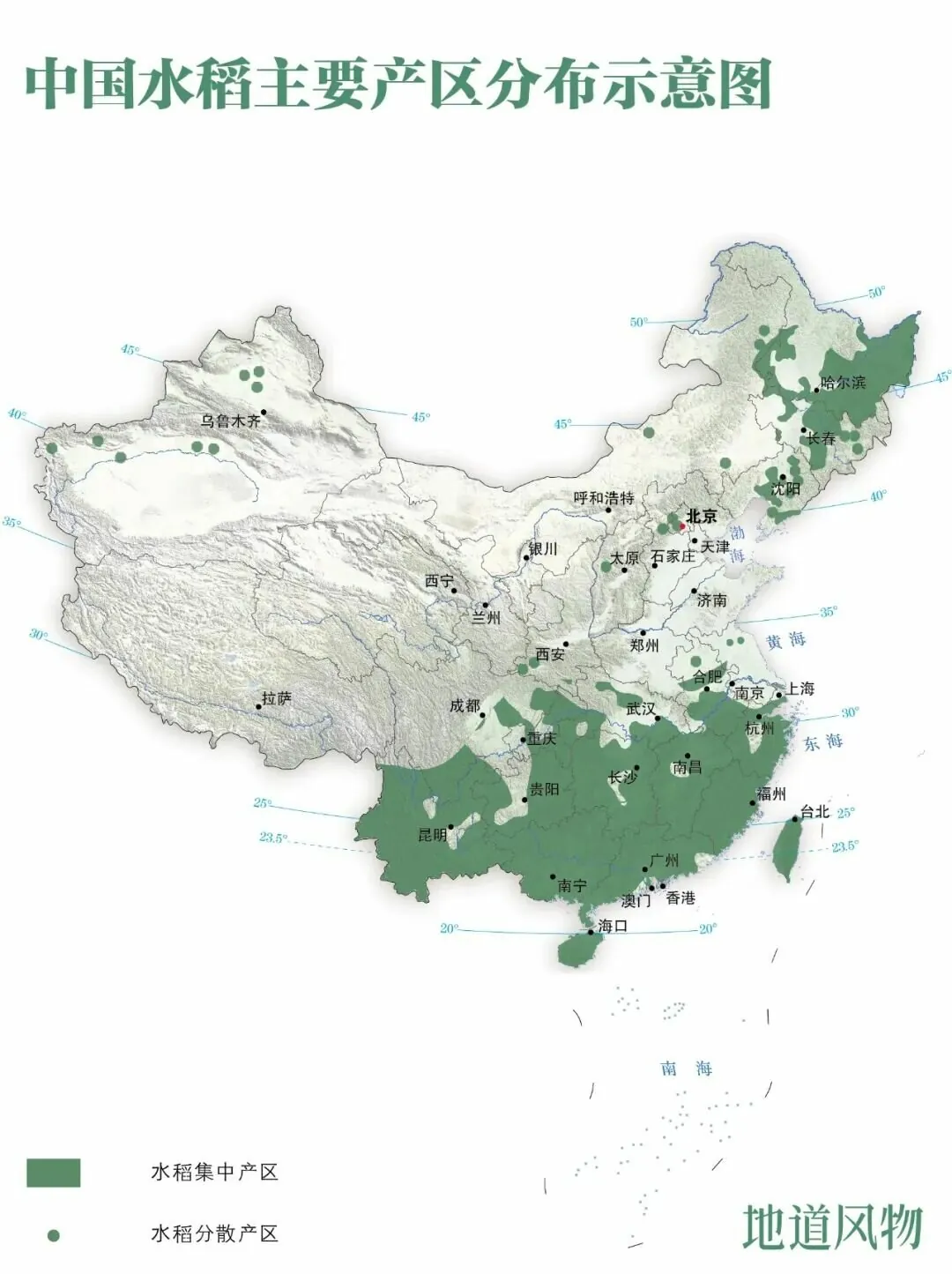
▲ Schematic map of China's major rice-producing areas. Map by Monk
Wherever rice can be grown, it always gives the impression of a "water town" and "prosperity." Today, such places are found all across the country:
From the southeastern island of Taiwan to the southern tropical land of Hainan;
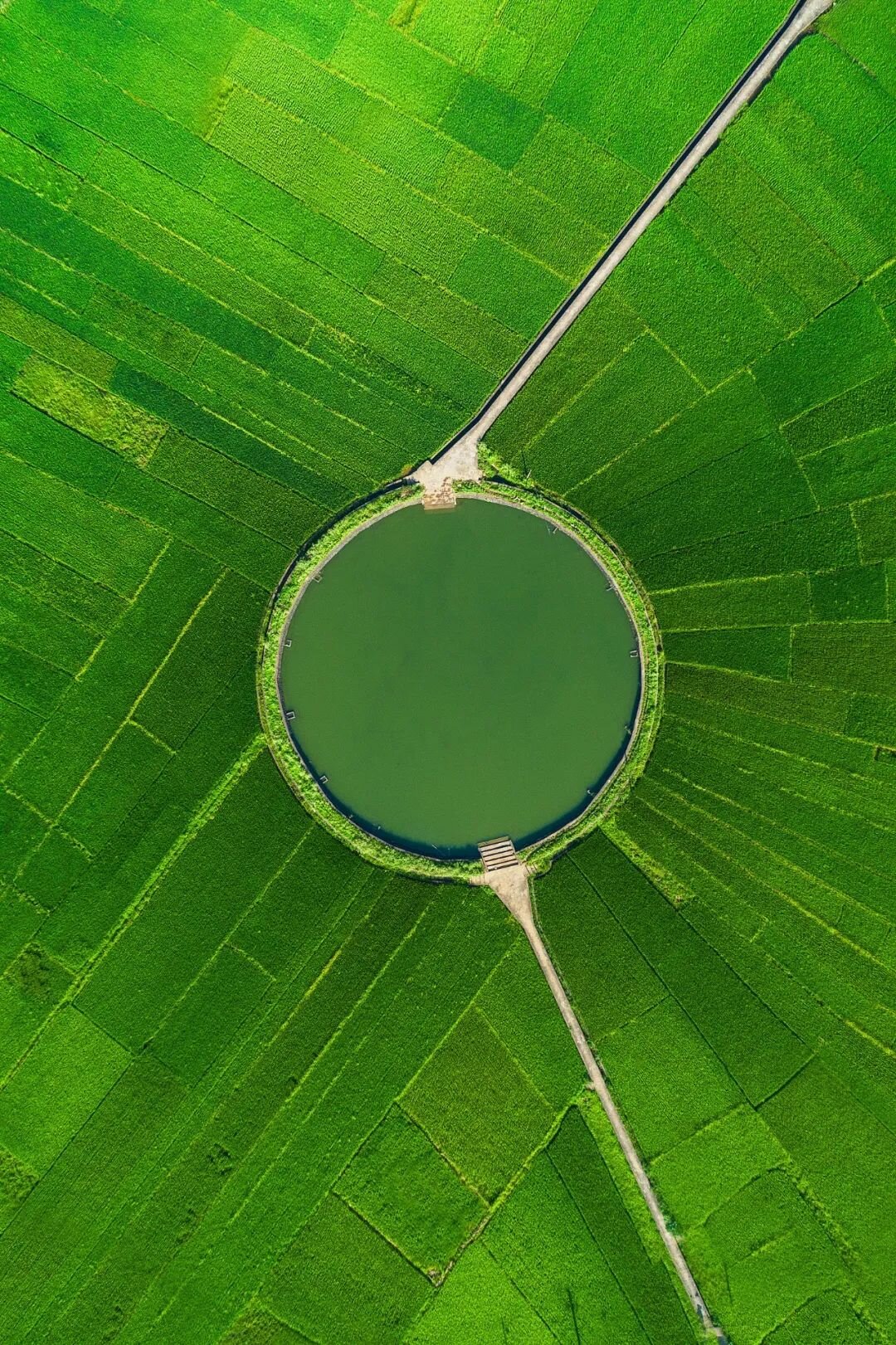
▲ Aerial view of rice fields in Haikou, Hainan. Image/VCG
North to the foothills of the Greater Khingan Mountains in Heilongjiang, and west to the foot of the Tianshan Mountains in Xinjiang;
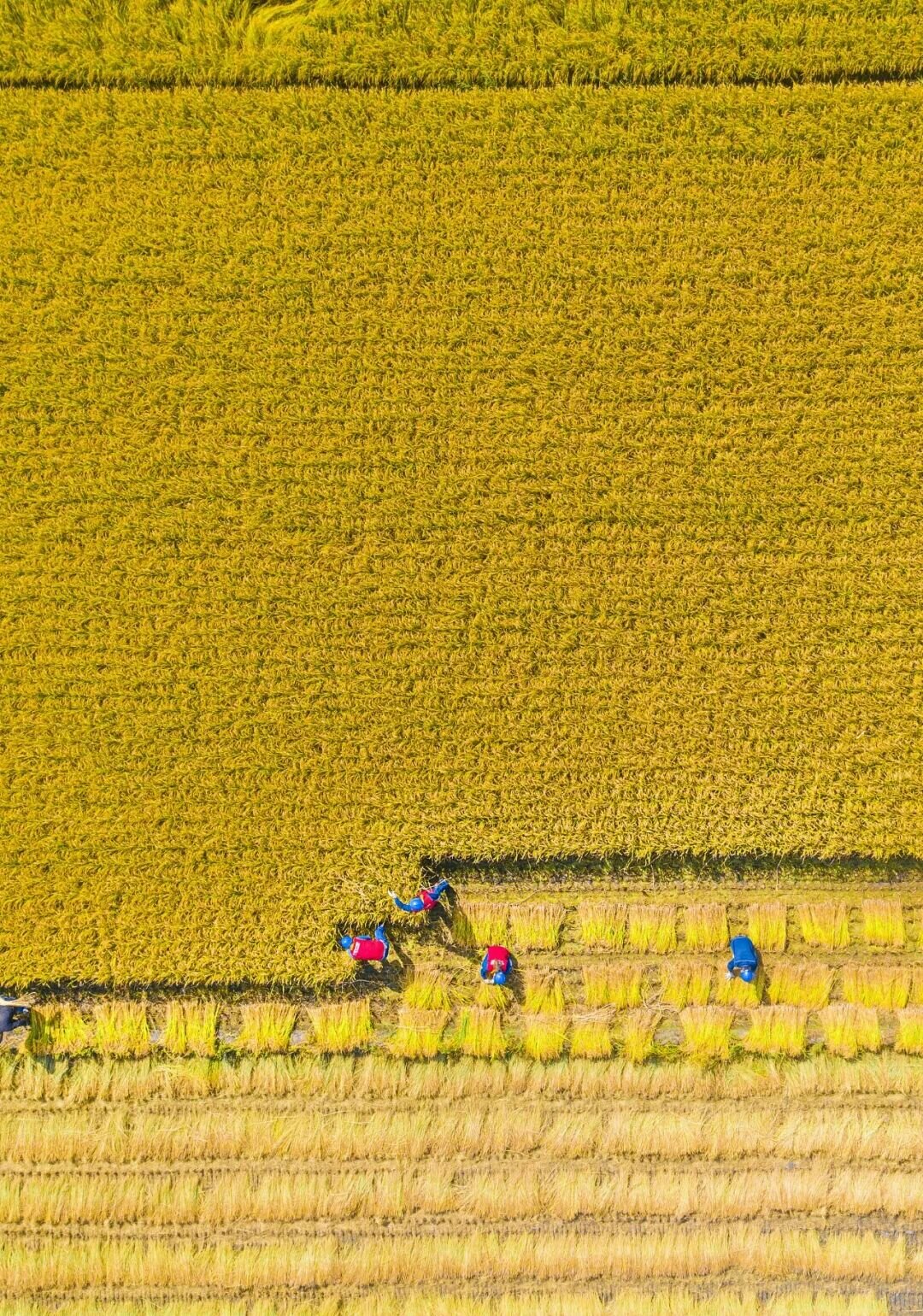
▲ Harvesting rice in Urumqi, Xinjiang. Image/VCG
From the coastal plains of the southeastern regions to the layered terraced fields of the Yunnan-Guizhou Plateau... the fragrance of rice blooms everywhere.
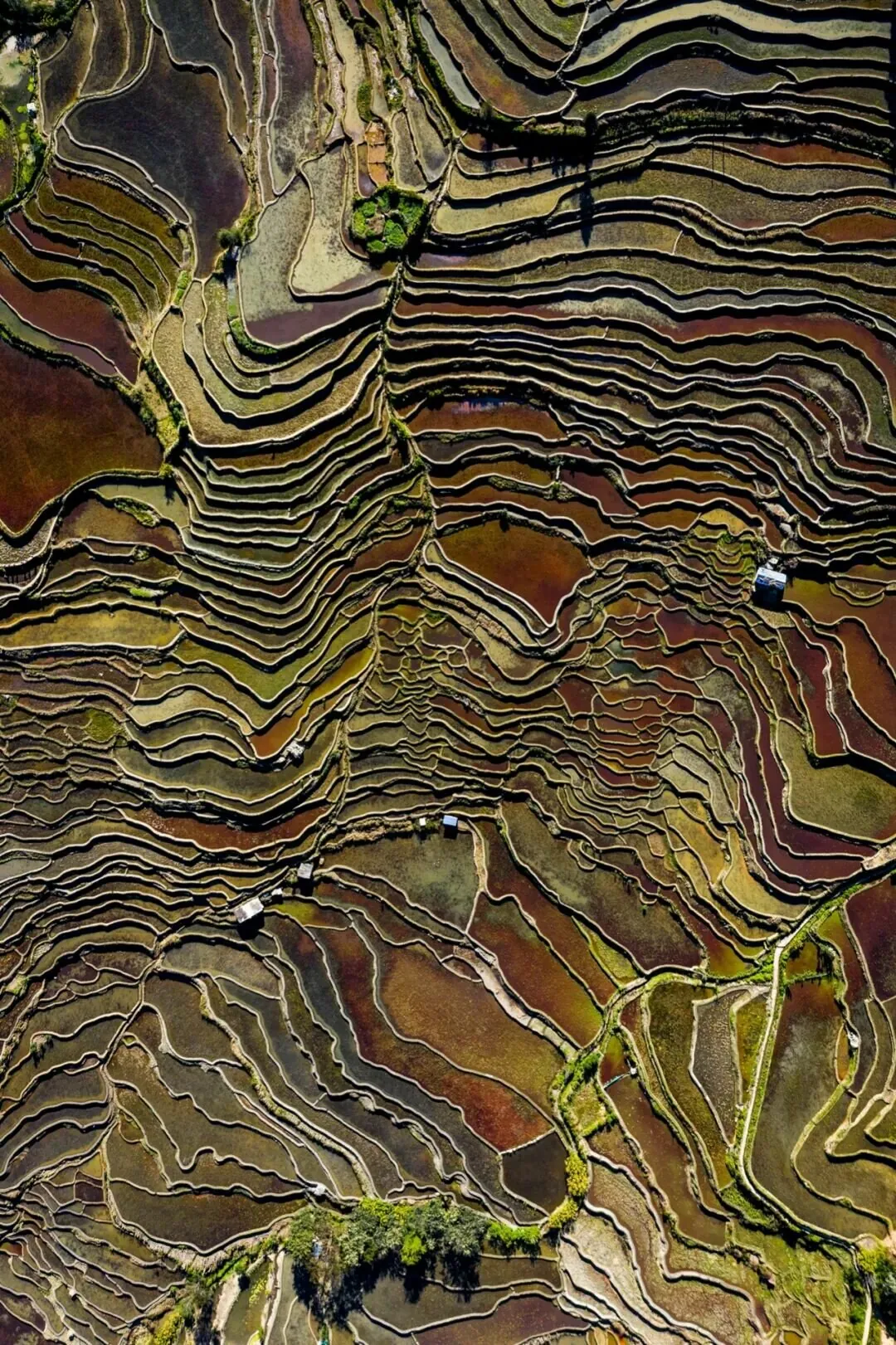
▲ Layered terraced fields in Yunnan. Photo by Li Wenbo
From an insignificant "weed" to a pillar of the dining table with an annual yield exceeding 210 million tons. Behind this lies the hard work and wisdom of generations of farmers.
The Yangtze Era: The Rise of a Weed
Starting from the Chengdu Plain, known as the "Land of Abundance," to the middle and lower reaches of the Yangtze River with its dense river networks, the Yangtze River Basin has always been a paradise for rice growth.
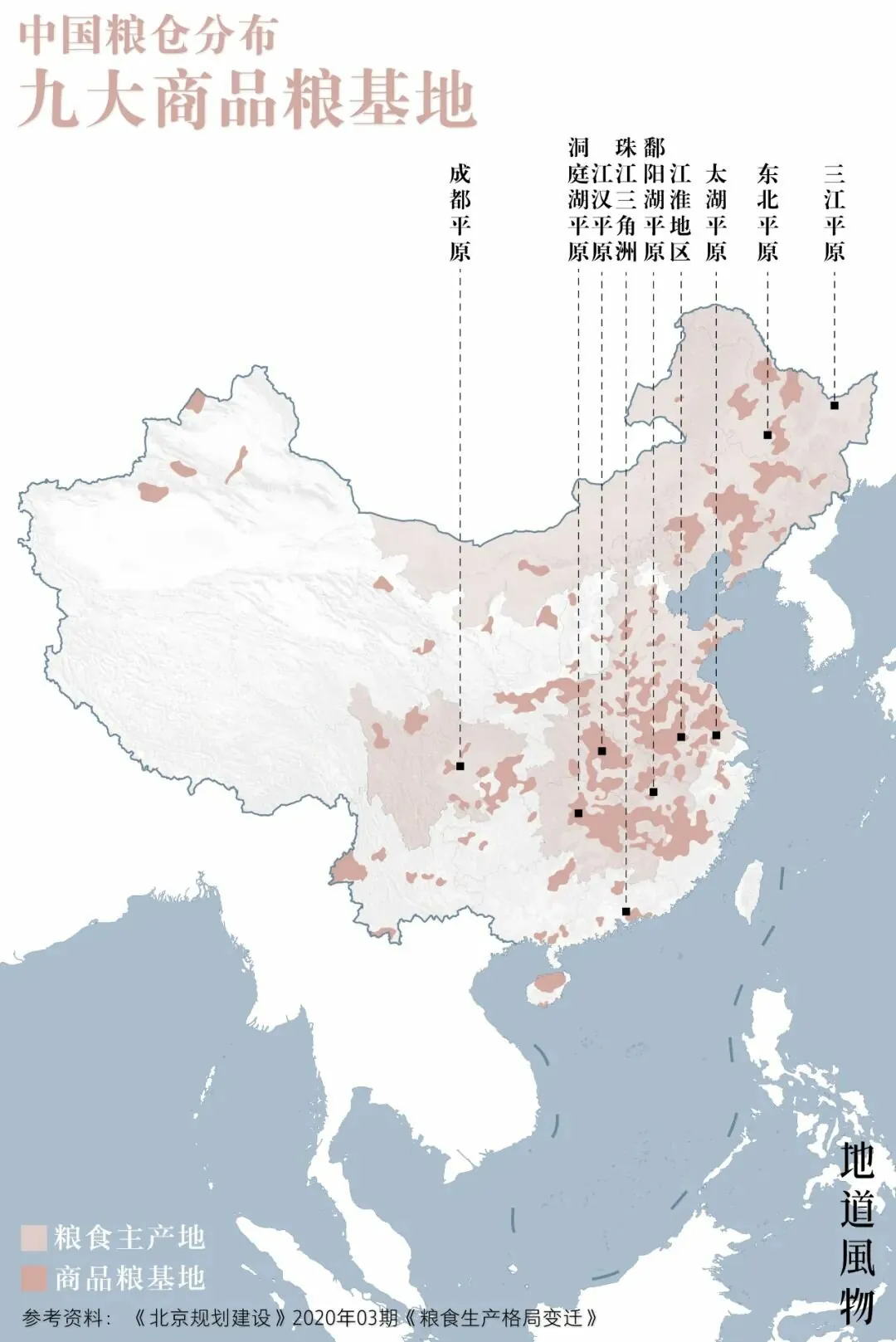
▲ China's commercial grain bases are mostly located in the Yangtze River Basin (data for Taiwan region not included). Map by F50BB
The discovery of rice stemmed from the ancestors' struggle against harsh environments.
The middle and lower reaches of the Yangtze River have always been humid, rainy, and prone to floods. Compared to the developed Yellow River Basin, this area was still called the "land of barbarians" until the Han Dynasty. The *Classic of History: Tribute of Yu* described Yangzhou (roughly south of the Huai River and the Yangtze River Basin) as having "the lowest grade of land," and the *Records of the Grand Historian* stated, "The south of the Yangtze is damp, and men die young."
Under such circumstances, the pioneering ancestors of Jiangnan discovered a unique crop in the widespread marshes.
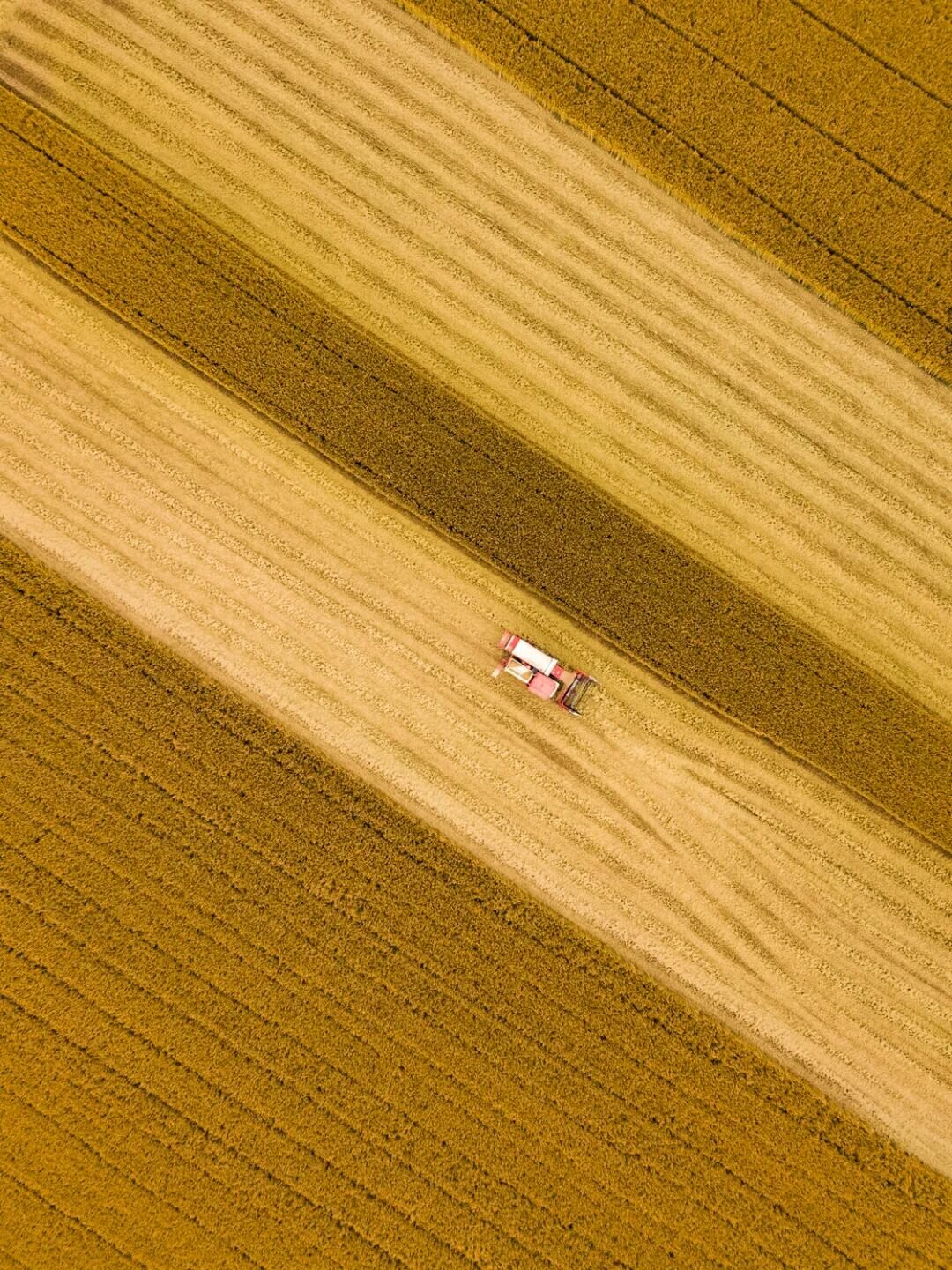
▲ Mechanized rice harvesting in Jiangsu. Photo by Yang Mo
Over 7,000 years ago, the Hemudu ancestors arrived in the water-rich plains around Lake Taihu. At that time, the Jiangsu and Zhejiang regions were warmer and more humid than today, with crisscrossing rivers and muddy land across the plains. In the swamps, the Hemudu people, who relied on fishing and hunting, discovered a type of "wild grass"—it thrived in damp and warm conditions and was not particularly demanding on soil; its seeds were rich in starch, enough to satisfy hunger; it could be harvested regularly every year, filling granaries. This was—
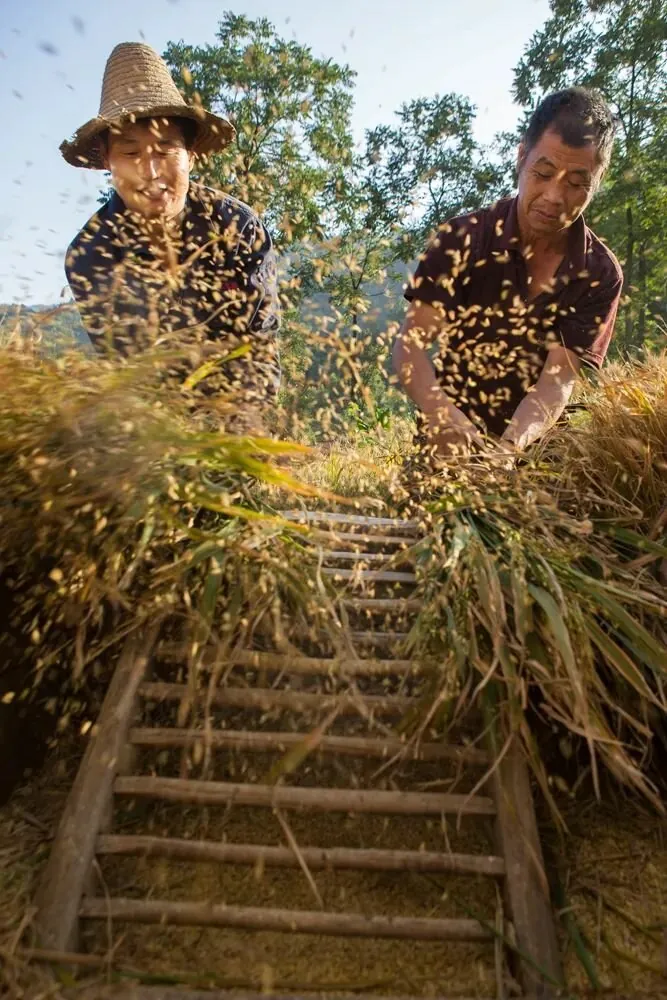
▲ Another year of good harvest. Photo by Shao Xiangdong
Rice allowed the Hemudu people to gradually see the dawn of agriculture from fishing and hunting.
By 5,300 years ago, the Liangzhu people established a city in what is now Hangzhou, transforming into "city dwellers." Outside the city, the Liangzhu people built China's earliest dam system, channeling water into canals to irrigate rice fields. At the Liangzhu site on Maoshan in Yuhang, rice field ruins covering a total area of 5,600 square meters have even been discovered, indicating that rice cultivation was already a focal point of agriculture at the time.
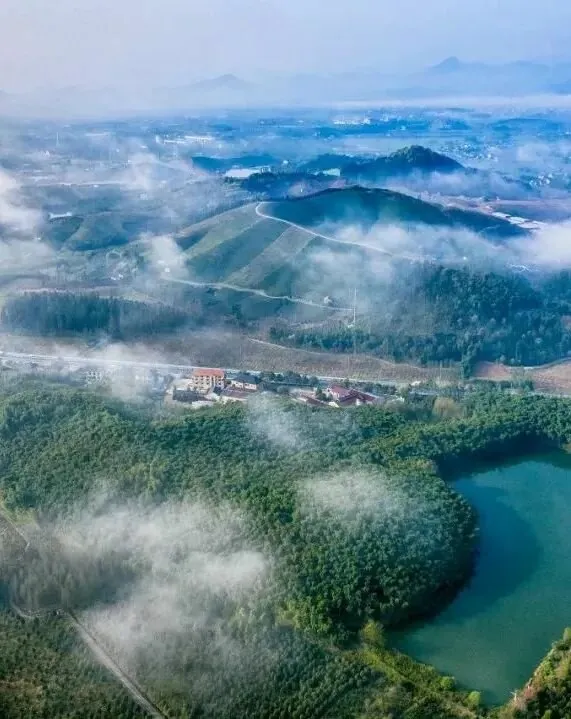
▲ The outer water conservancy system, composed of the valley high dam area, plain low dam area, and piedmont long embankment area, is located to the west and north of the Liangzhu Ancient City site. Photo by Zhu Guancheng
For thousands of years, this crop, born in marshes and cultivated in paddies, has been the lifeline of the people in Jiangnan. The history of the Taihu Basin is a history of guerrilla warfare "contesting land with water."
During the Spring and Autumn period, in Suzhou, Jiangsu, the tiny grain of rice stirred the clash of swords between Wu and Yue: the Wu people "stole" water conservancy techniques from Chu, transformed the land, strengthened the state's power, and suppressed Yue; King Goujian of Yue, in turn, returned boiled rice seeds to Wu, weakening the enemy's strength.
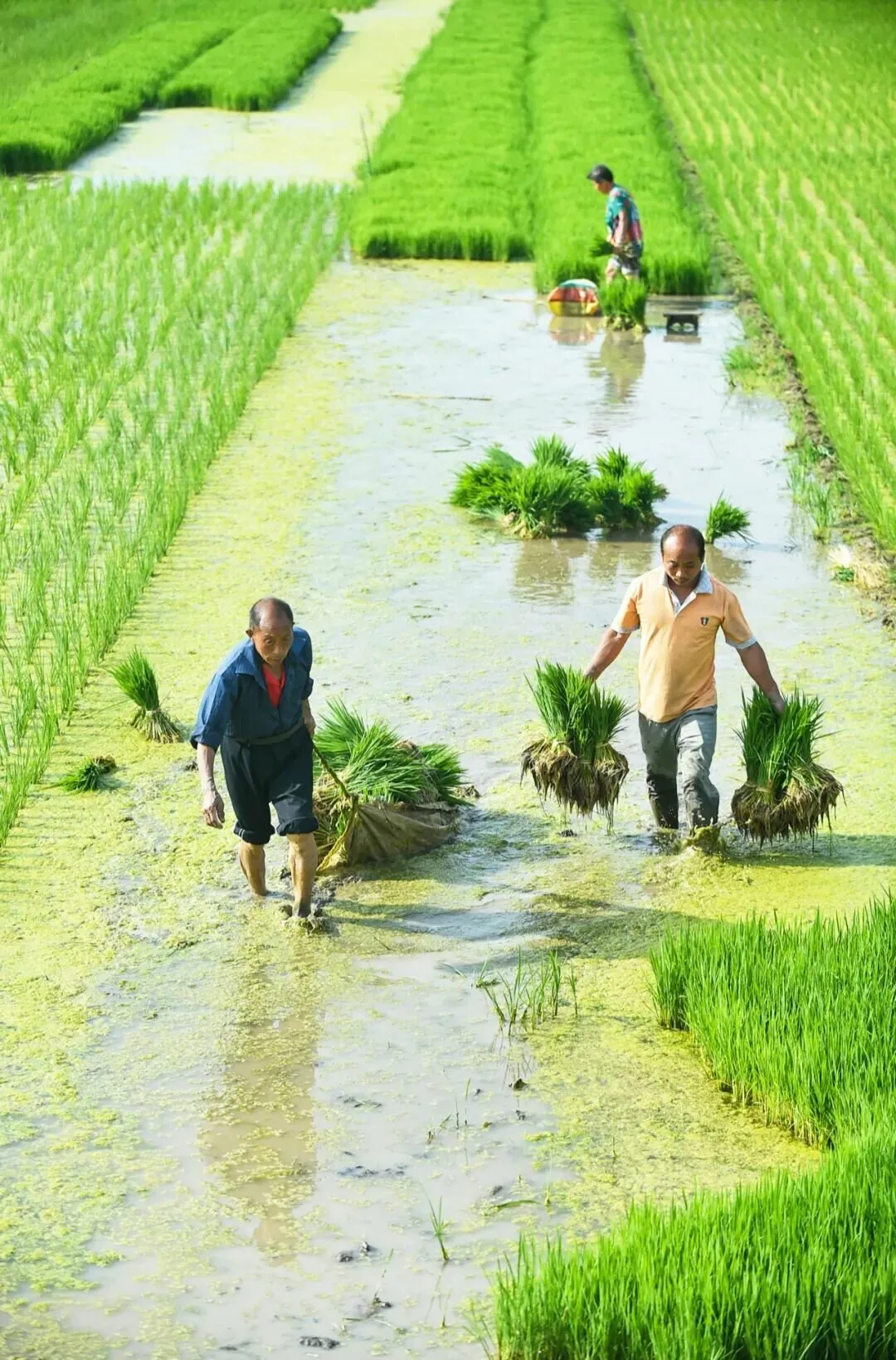
▲ In the midst of summer, farmers are busy pulling and transplanting rice seedlings. Photo by Huang Zhengwei
After destroying Wu, the Yue people continued to advance "land reclamation" activities, shaping high "lingdao" (embankment roads), using dams to control the "bad temper" of the Jiangnan water system, and forming the prototype of the "land of fish and rice."
After the Sui and Tang dynasties, rice yield became synonymous with wealth. Han Yu of the Tang Dynasty once said:
"Taxes from all under heaven, and Jiangnan contributes nine-tenths."
In the Tang Dynasty, taxes mostly came from grain yields. Jiaxing, jokingly called "Farming Jia" today, once relied on the benefits of rice to support almost half of the Jiangnan region. By the Song Dynasty, a new, faster-maturing rice variety—Champa rice—was introduced from Vietnam to Fujian and vigorously promoted in areas such as Jianghuai and Liangzhe.
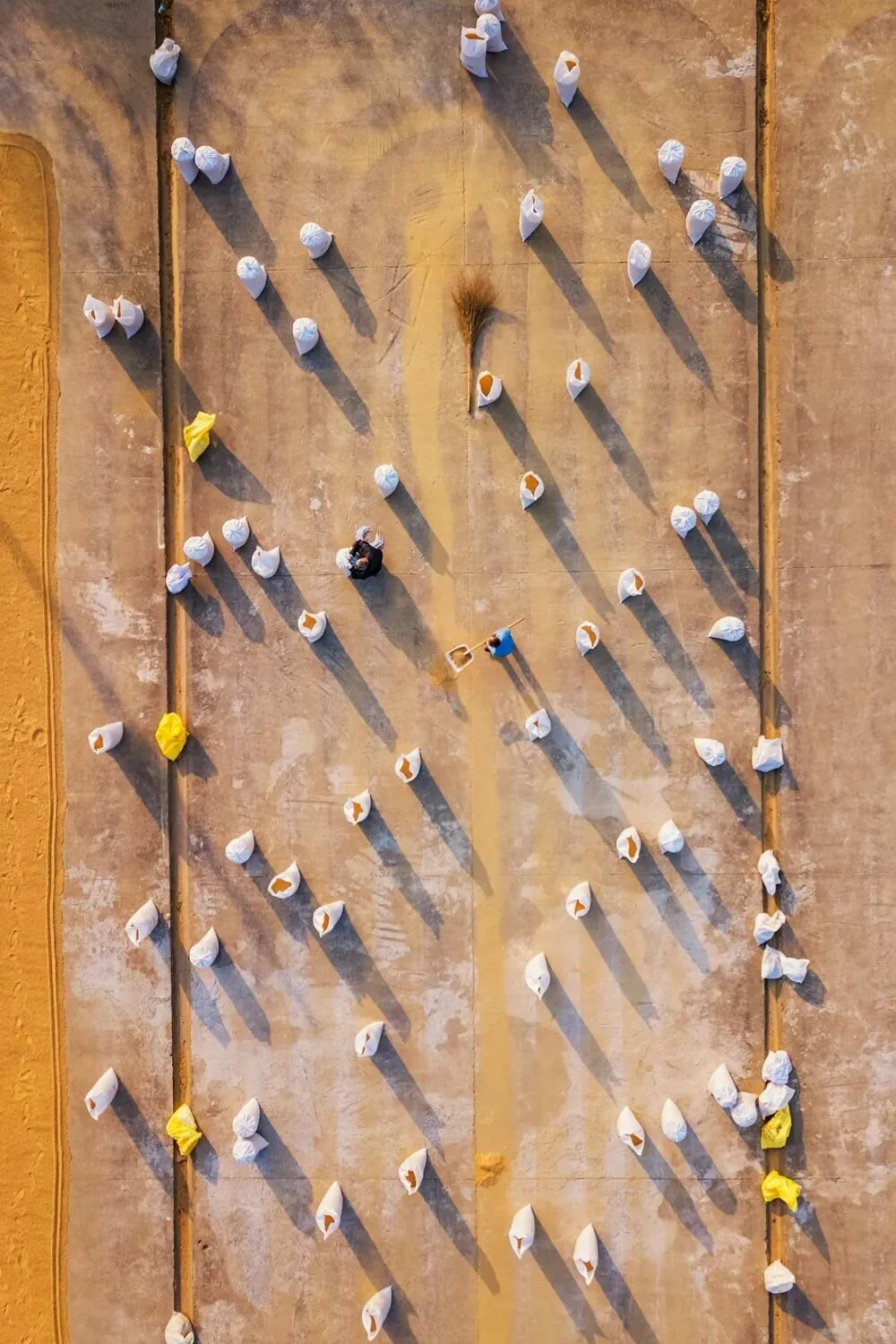
▲ Rice being bagged in Huai'an, Jiangsu. Photo by Yang Mo
This new rice variety was early-maturing, drought-resistant, and had fine grains; it "grew without choosing land" and was suitable for high-elevation fields, helping to prevent drought damage in various southeastern regions. In Hangzhou, Emperor Gaozong of Song, Zhao Gou, who had fled south, personally directed rice planting, opening up an eight-color, highly stylized rice field at the southern foot of Yuhuang Mountain—the Bagua Field.
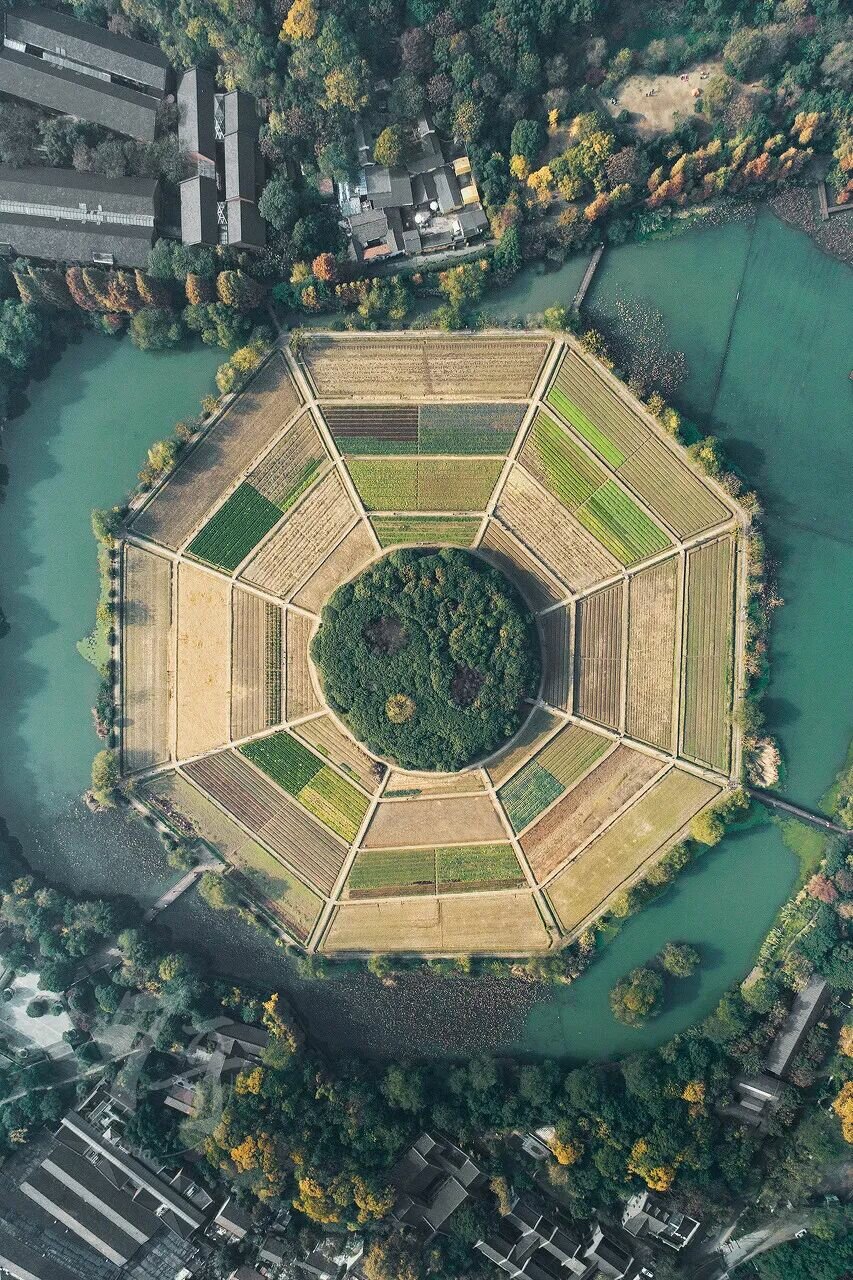
▲ Hangzhou's Bagua Field. Photo by Ni Qige, Image / Tuchong Creativity
Champa rice, combined with local late rice, increased the harvest efficiency from "one crop a year" to "two crops a year." This double-cropping model greatly improved land utilization in the Jiangnan region, making it the nation's granary. By the Ming Dynasty, a proverb about rice began to spread: "When Su and Hu ripen, all under heaven is full."
From "When Su and Hu Ripen" to "When Hunan Ripens"
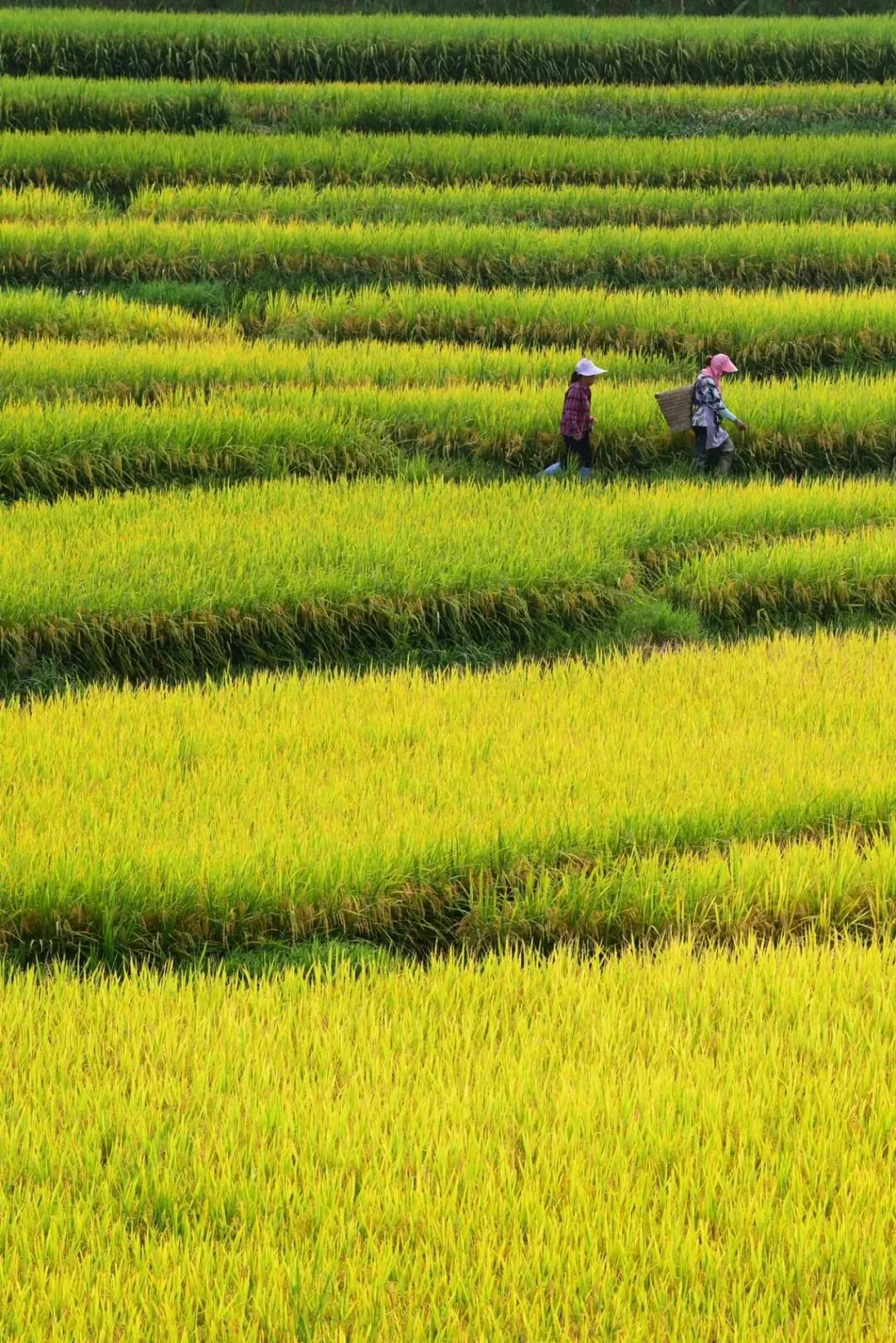
▲ In Tusi Ba Village, Enshi Tujia and Miao Autonomous Prefecture, Hubei Province, a bountiful rice harvest is in sight. Photo by Li Weijun
During the Ming and Qing dynasties, due to the development of the commodity economy in the Jiangnan region, industries such as mulberry cultivation and silkworm rearing, sea enclosure for salt production, and tea picking became the main themes of agriculture here. To ensure food supply, rice cultivation shifted to the Huguang region (modern Hunan and Hubei) in the middle reaches of the Yangtze River, as well as Jiangxi. The folk proverb also changed from "When Su and Hu ripen, all under heaven is full" to "When Huguang ripens, all under heaven is full."
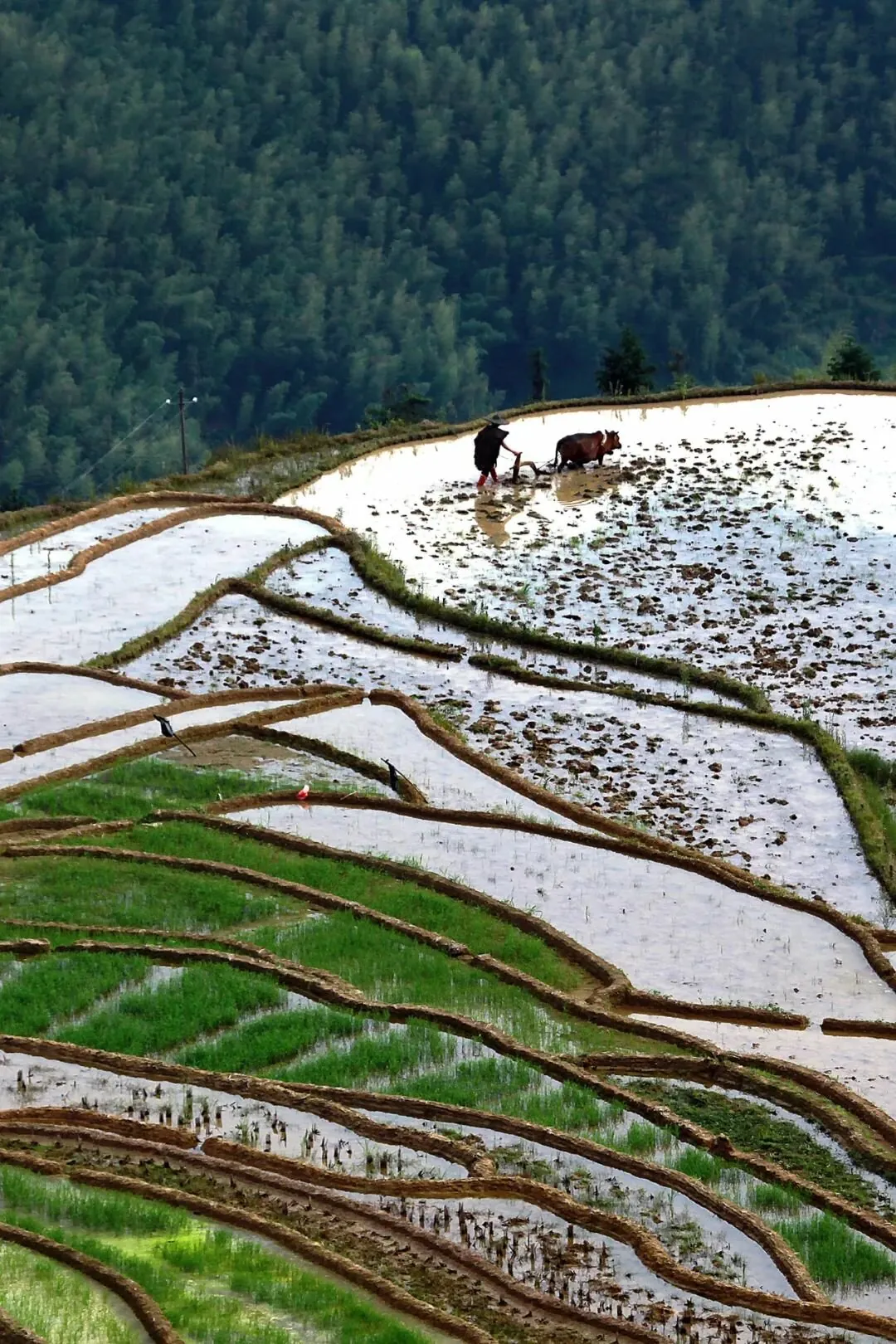
▲ Shangbao Terraced Fields in Ganzhou, Jiangxi. Photo by Yang Xin
Dongting Lake and Poyang Lake became new grain storage base points. By the second year of Emperor Qianlong's reign in the Qing Dynasty, the folk saying "When Hunan has a good harvest, the whole country has enough to eat" emerged. Hunan quietly became the new core of grain storage.
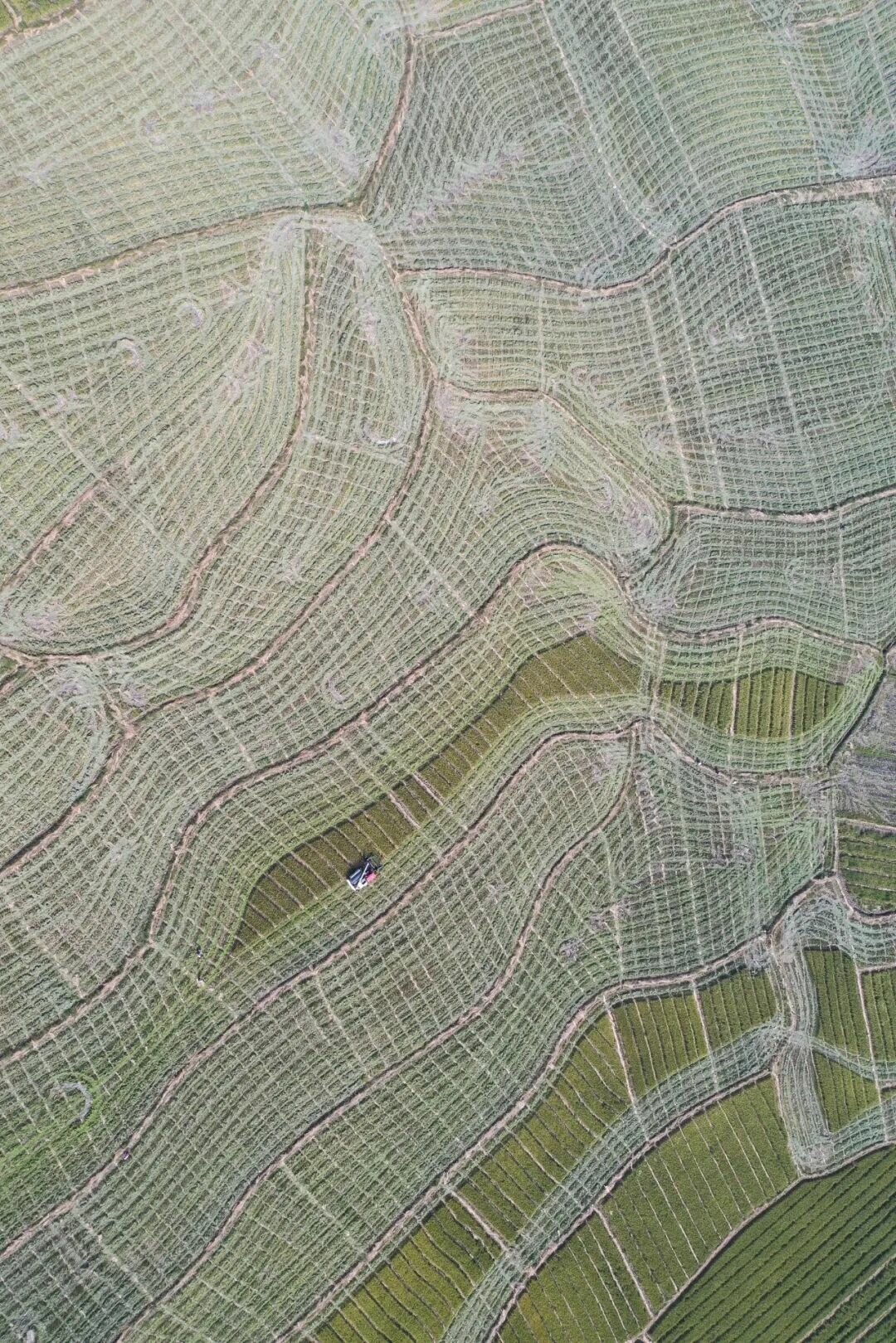
▲ Harvesting and breeding rice in Huaihua, Hunan. Photo/VCG
Hunan is rich in water. The four major rivers—Xiang River, Zi Shui, Yuan River, and Li Shui—flow through the region and eventually converge into the vast and magnificent "master switch of the water system"—Dongting Lake. The plains and waterlands shaped by rivers and lakes, the rainy and warm environment brought by monsoons, combined with Hunan's horseshoe-shaped terrain surrounded by mountains on three sides, make it a "peach blossom spring" for rice growth.

▲ Drying autumn grains in Lingyang, Anhui. Photo/Ding Jiayi
By the Qing Dynasty, the Jiangsu and Zhejiang regions, once the nation's granary, were already "largely dependent on merchants from Jiangsu and Hunan for grain." The four major rice markets of the Qing Dynasty—Jiujiang in Jiangxi, Wuxi in Jiangsu, Wuhu in Anhui, and Changsha in Hunan (or Shashi in Hubei)—were all located at hubs for transporting grain from the Huguang region to the Jiangnan region. Among these, Changsha gradually became the top rice market, and the wealth accumulated from grain sales became a cornerstone for the emergence of Hunanese talent in the late Qing Dynasty.
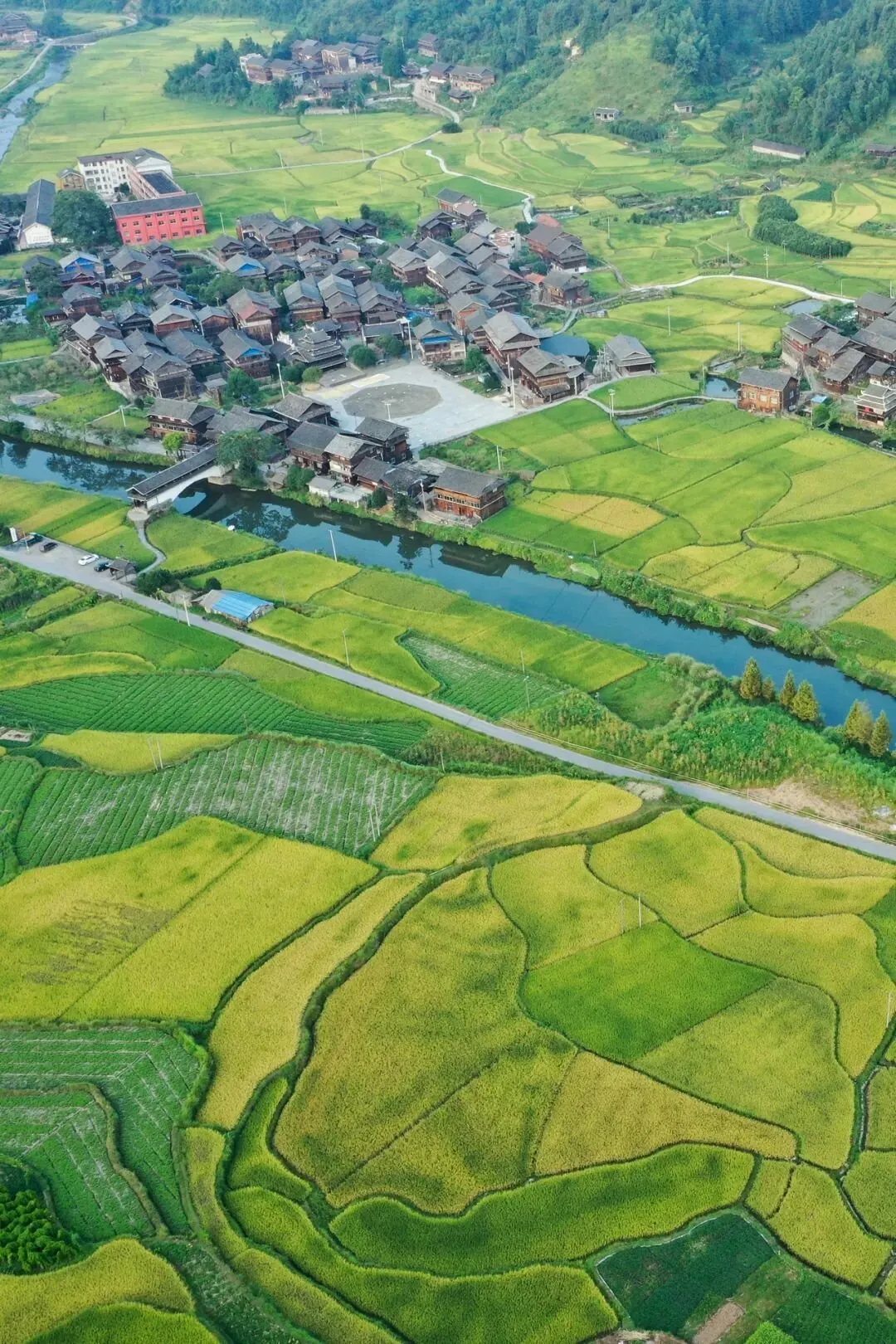
▲ Autumn harvest approaching in Huaihua, Hunan. Photo/VCG
In ancient times, Hunan was a crucial granary; today, it is a leading rice-producing province. It was in Anjiang Town, Huaihua, Hunan, that Academician Yuan Longping began China's research on hybrid rice. Today, Hunan is the province with the largest hybrid rice planting area in China.
The "Land Reclamation" Era in the North: Building a New Granary for China
"Speaking of a bountiful year amidst the fragrance of rice blossoms" is by no means a scene exclusive to the southern Yangtze River Basin.
In northern regions such as Northeast China, Hebei, and Shandong, there is also a long history of rice cultivation. The rice grown in the northern lands has been of imperial tribute quality since ancient times. Today, Northeast rice has even become synonymous with high-quality rice.
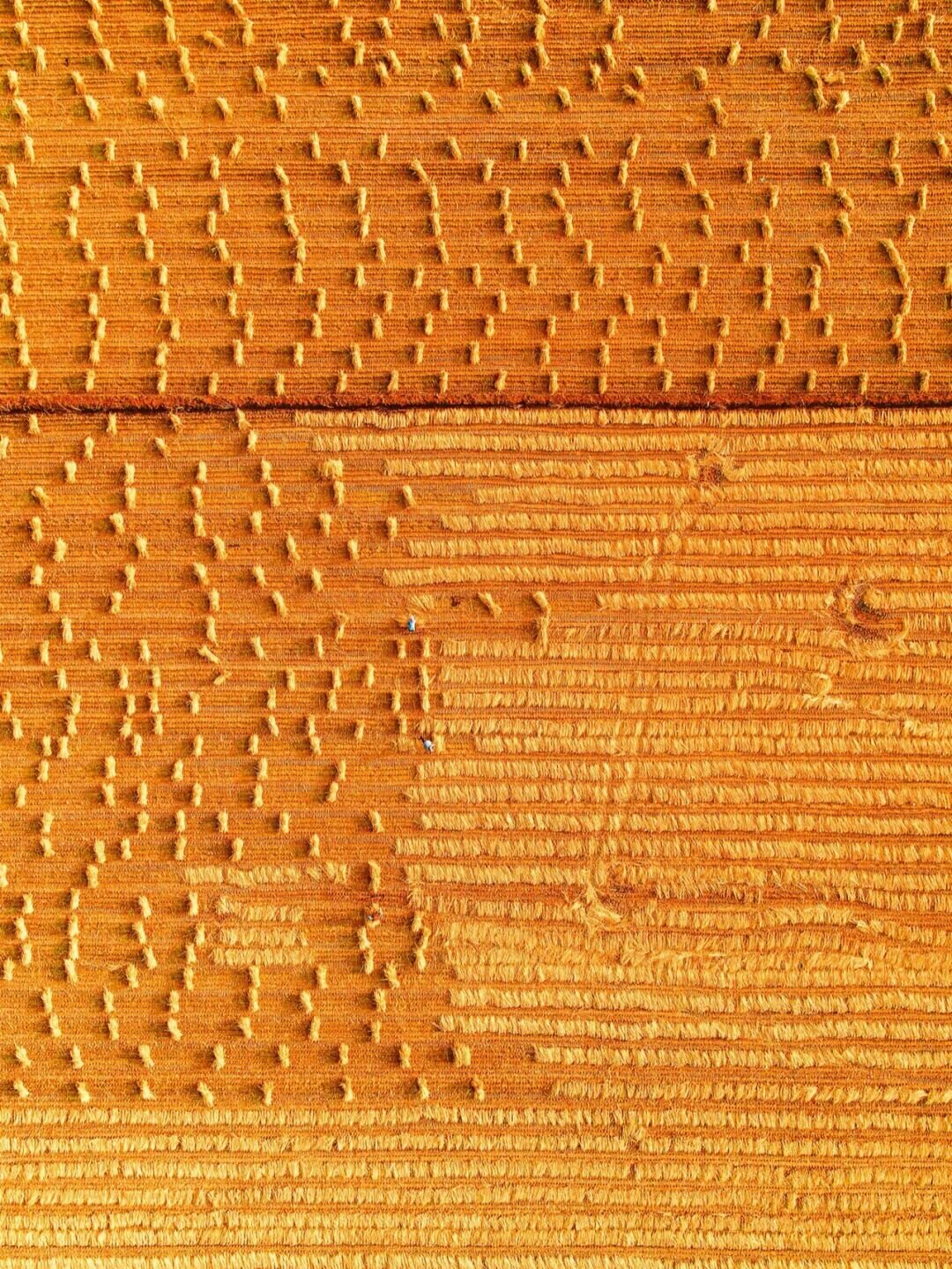
▲ Rice harvest in Shunfu Town, Taonan City, Jilin. Photo/Qiu Huining
Northeast China: From the "Great Northern Wilderness" to the "Northern Rice Capital"
Many people would answer "Northeast rice" to the question of which region produces the most delicious rice. In fact, widespread rice cultivation in the Northeast has a history of less than a hundred years, and its popularity across the country is a phenomenon of the last two or three decades. However, if ancient Northeast inhabitants from thousands of years ago knew this region would become the "Northern Rice Capital," they probably would not be surprised.
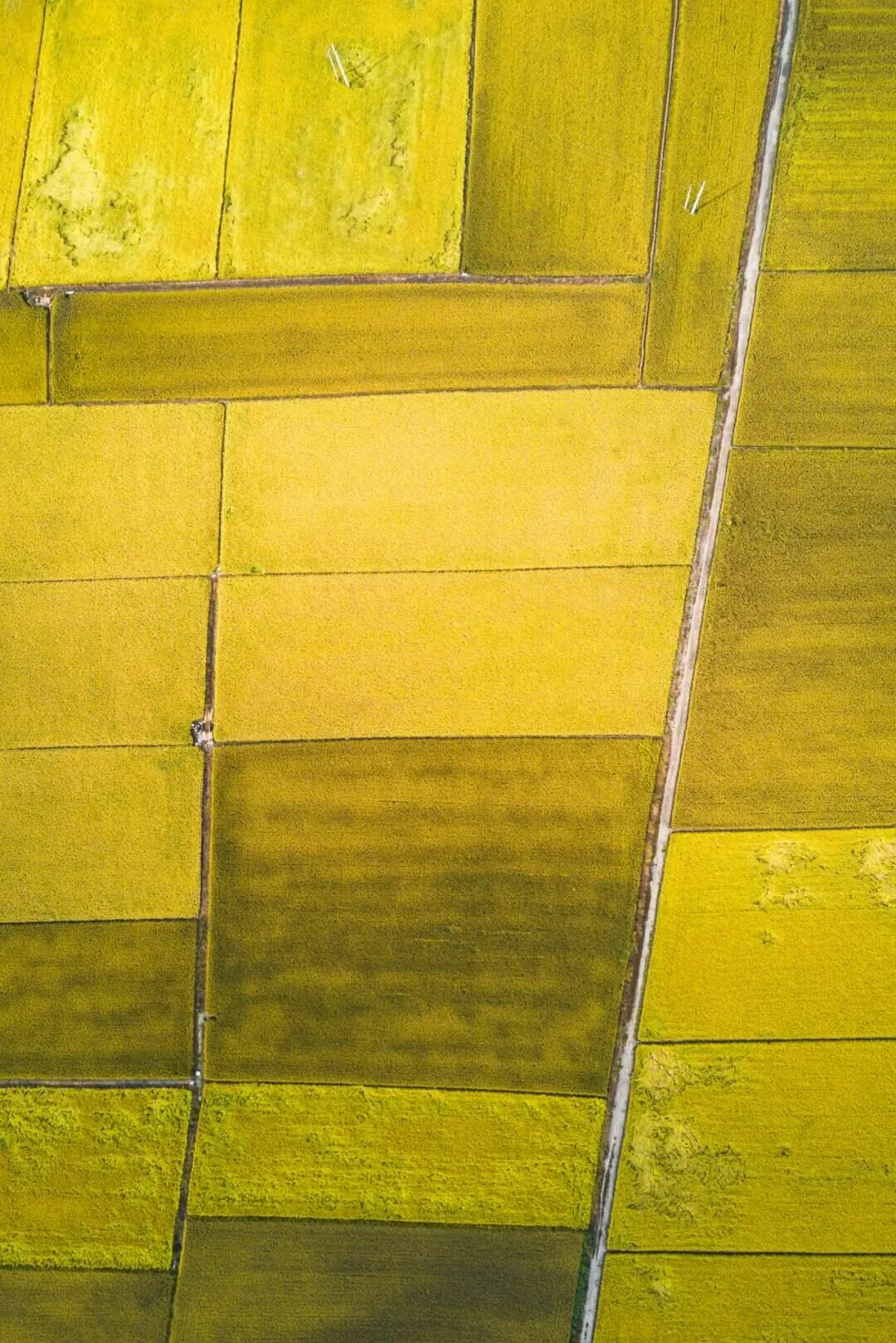
▲ Golden terraced fields in Shenyang, Liaoning. Photo/Yue Zhiqiang
Rice cultivation sites dating back thousands of years have been discovered in many parts of Liaoning. Among them, the Dazuizi site in Dalian City revealed both sorghum and rice, pushing the history of rice cultivation in the Northeast back over 3,000 years. During the Tang Dynasty, 1,400 years ago, the Bohai Kingdom in Northeast China had a variety known as "Lucheng Rice," which was recorded in the New Book of Tang for its delicious taste.
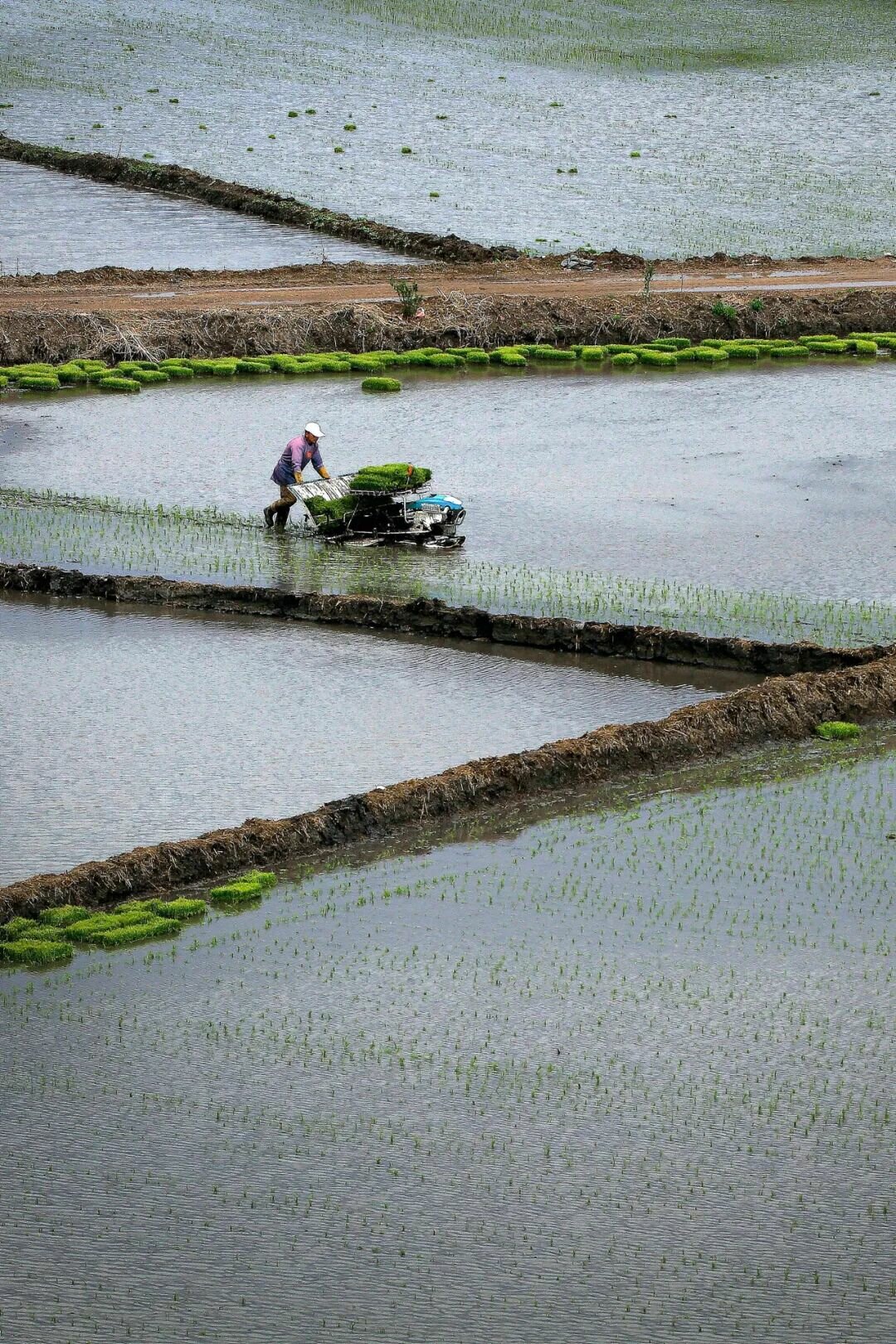
▲ Farmers working in rice fields near the Tao'er River in Jilin. Photo/Qiu Huining
After the fall of the Bohai Kingdom, Northeast rice culture disappeared from historical records for a thousand years. It was not until the Kangxi era of the Qing Dynasty that Northeast rice reappeared in written records, being exclusively supplied as "imperial grain" for its high quality. By the late Qing Dynasty, contiguous rice paddies had already appeared near rivers and wetlands in the Tonghua region.
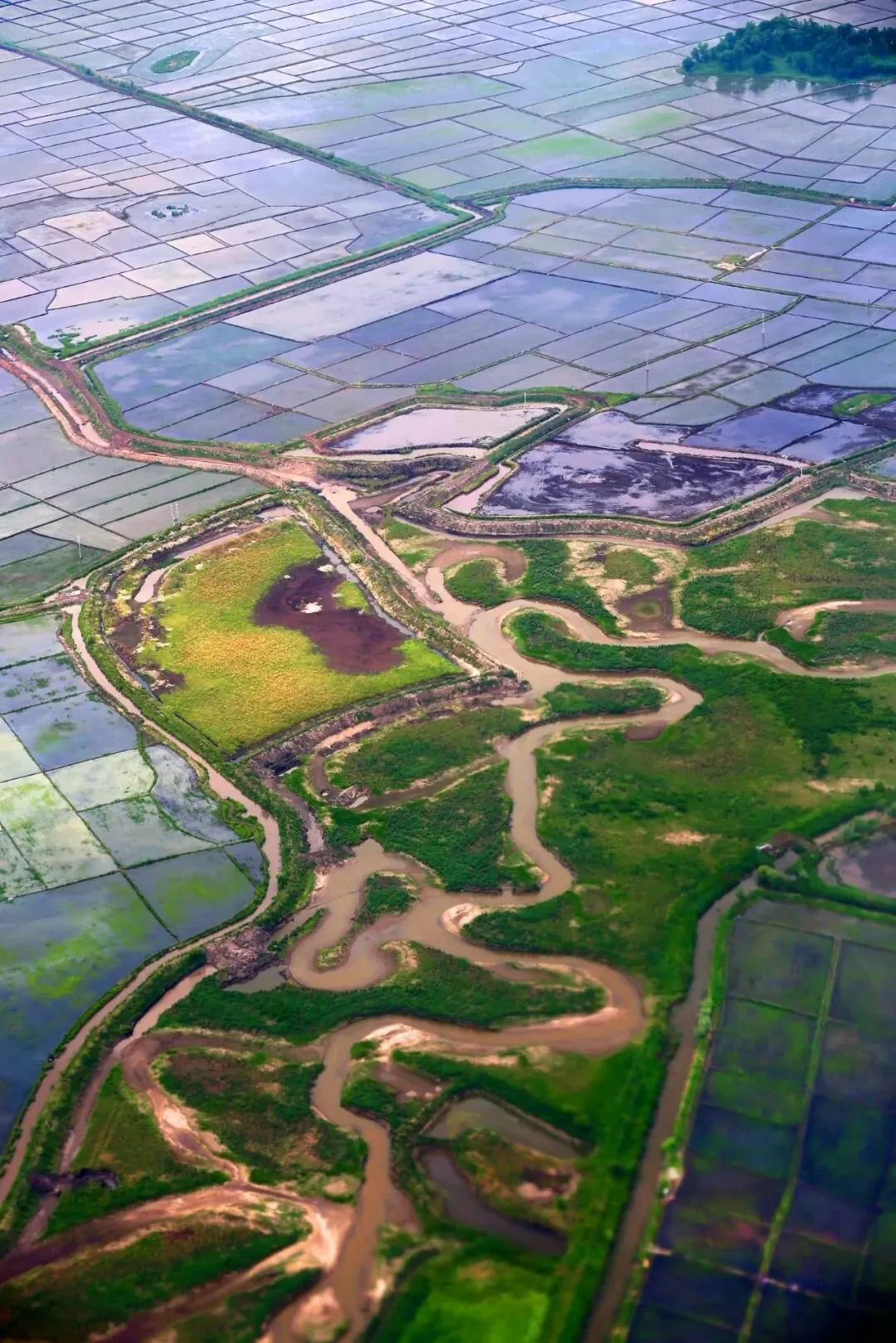
▲ Expansive rice fields in Heilongjiang today. Photo/VCG
However, rice cultivation at the time was not yet large-scale. Across the entire Northeast, the land remained largely uncultivated—a vast "Great Northern Wilderness." The land reclamation热潮 sparked by the "Chuang Guandong" migration in the late Qing and early Republican periods, as well as the Japanese invaders' construction of irrigation districts and establishment of rice bases during the伪满 period, did not truly establish rice cultivation in the Northeast.
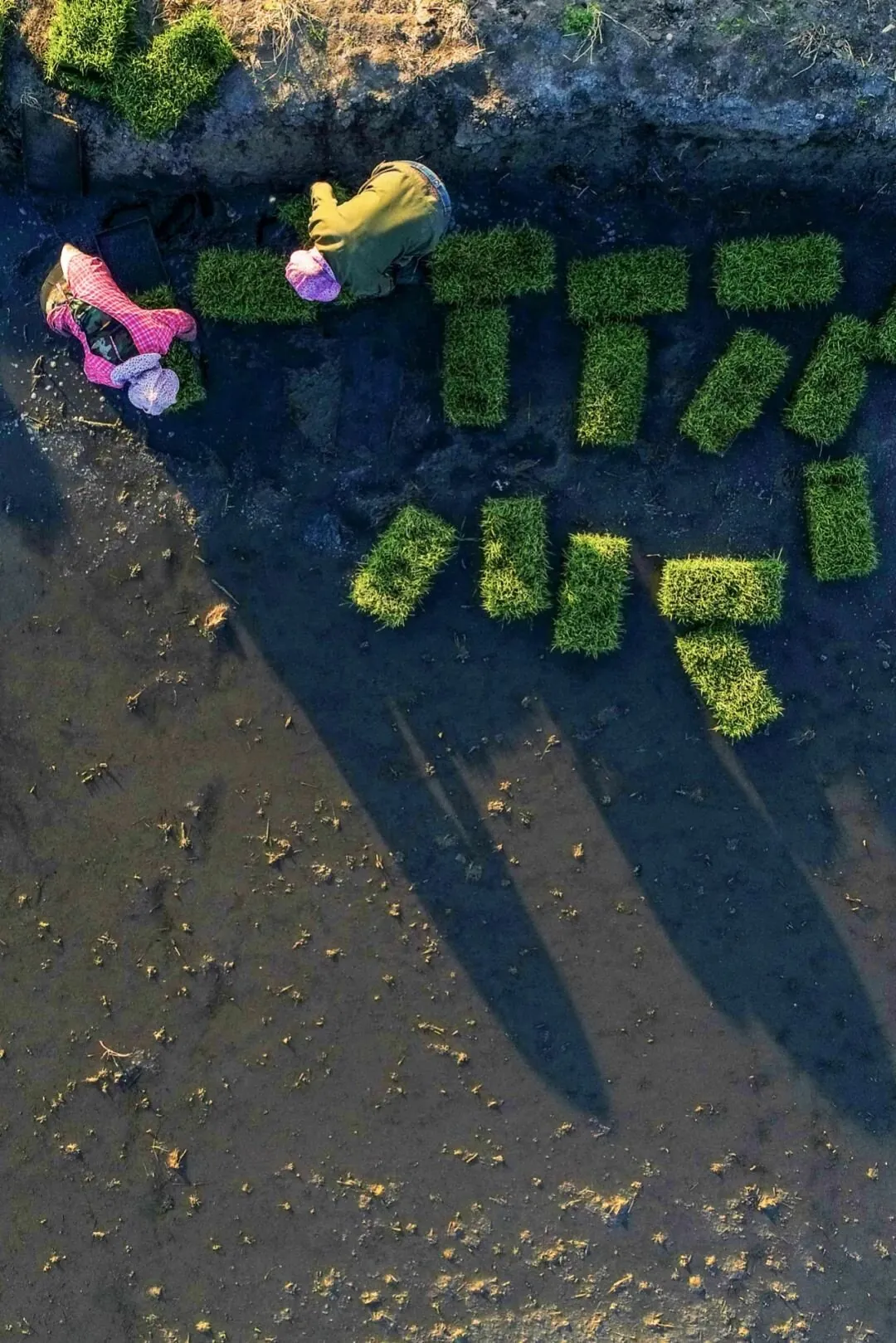
▲ Rice transplanting in Taonan, Jilin. Photo/Qiu Huining
It was not until the establishment of the New China that countless agricultural experts, represented by Yang Shouren and Xu Yirong, known as the "Fathers of Northeast Rice," made continuous efforts in breeding cold-tolerant and highly adaptable varieties; hundreds of thousands of people participated in land reclamation, building water conservancy projects and developing saline-alkali land; Shenyang drilled tens of thousands of wells, pioneering the practice of well-drilling for rice cultivation in the world, ultimately turning this region into a prosperous Chinese "granary."
Northeast China's rise as the "Rice Capital of the North" is a miracle of the rice industry achieved by countless Chinese people. Of course, this miracle is not accidental—it owes much to the natural advantages of "heaven-bestowed favor."
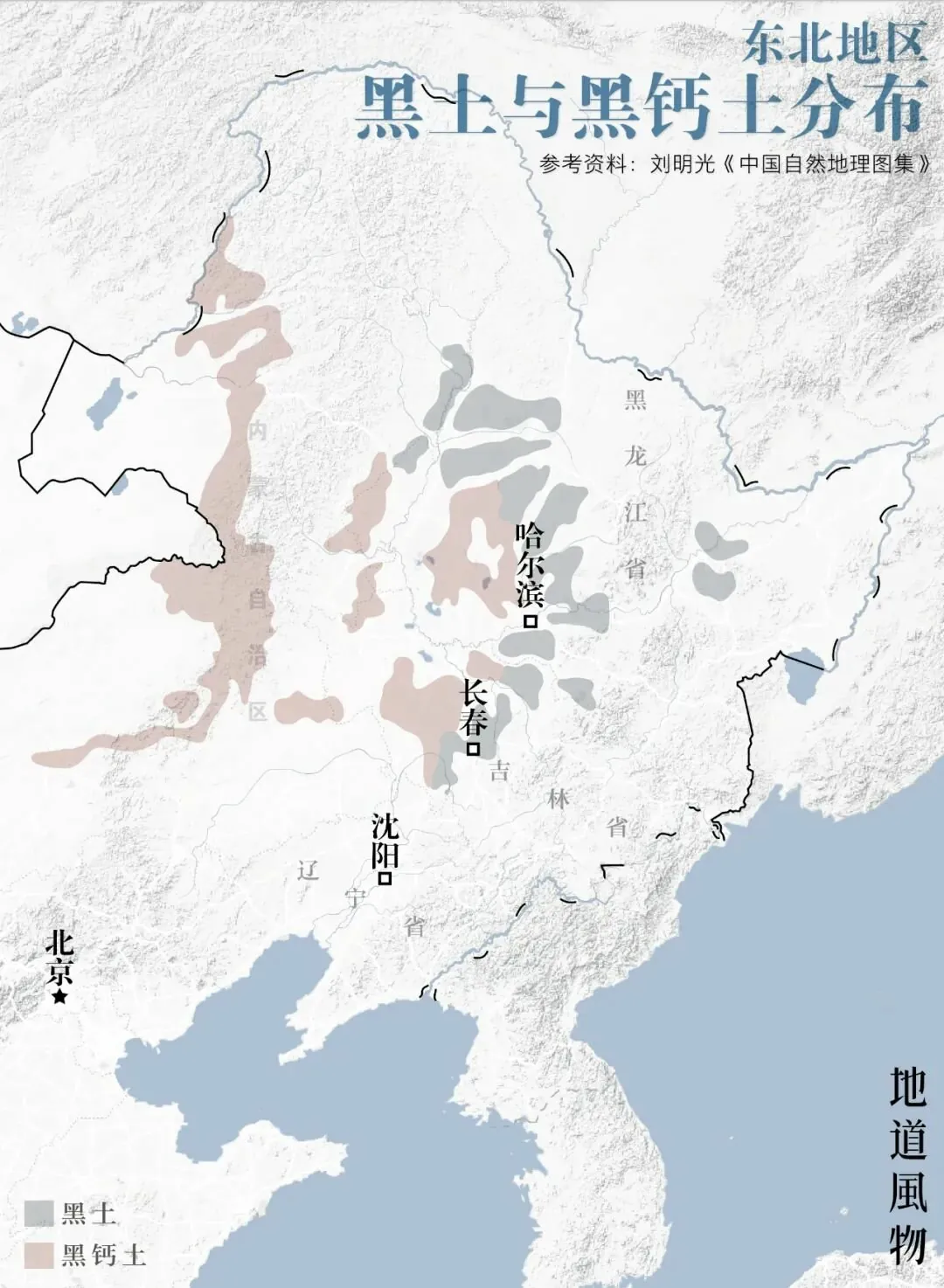
▲ Distribution of black soil and chernozem in Northeast China. Map/F50BB
Northeast China lies in the golden japonica rice planting zone at 40-45 degrees north latitude, home to one of the world's only three remaining black soil regions—"squeeze a handful of black soil, and oil seeps out; stick a pair of chopsticks, and sprouts will grow." Moreover, with its crisscrossing water networks, numerous lakes, concurrent rain and heat, abundant sunshine, and significant diurnal temperature variations, it is only natural that the rice produced here is of exceptional quality.
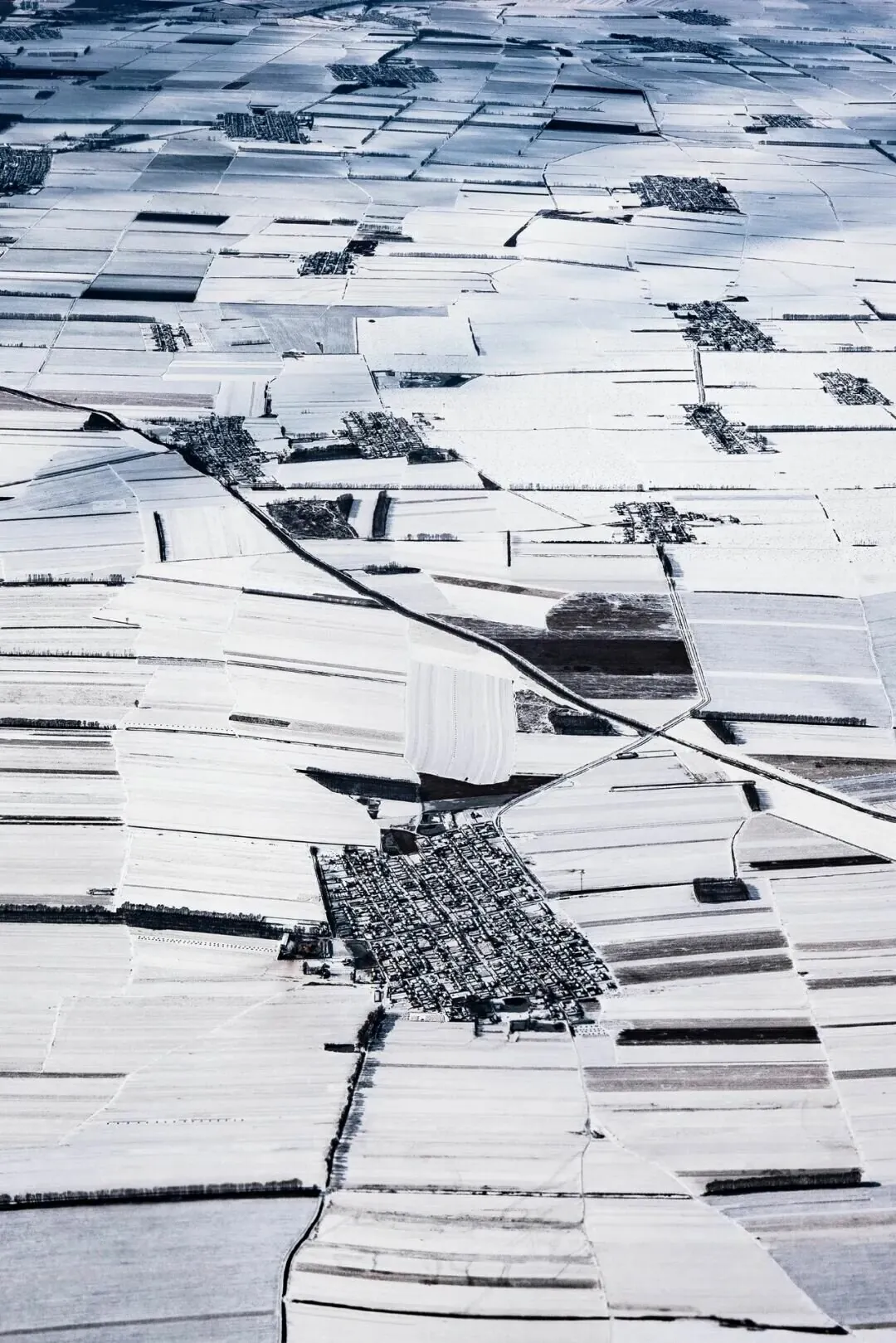
▲ Snow-covered rice fields in Shuangcheng, Heilongjiang. Photo/Fu Ding
Today, Northeast rice continues to push the limits of its survival—Huma County in the Greater Khingan Range of Heilongjiang is the northernmost rice-growing area in the world. It also continually breaks yield records: japonica rice cultivation area accounts for nearly half of the national total, Heilongjiang ranks third in the country in total rice planting area, and its total output is second only to Hunan; Jilin leads the nation in rice yield per unit area...
On the Sanjiang Plain and the Songnen Plain, the black soil nurtured by the "white mountains and black waters" has long transformed from the former "endless fields of soybeans and sorghum" into vast, seamless expanses of rice paddies.
North China & Northwest China丨Where There Is Water, There Are Rice Waves
Beyond Northeast China, across the vast northern regions north of the Qinling Mountains and Huai River, the Chinese people have also been seeking suitable places for rice to thrive.
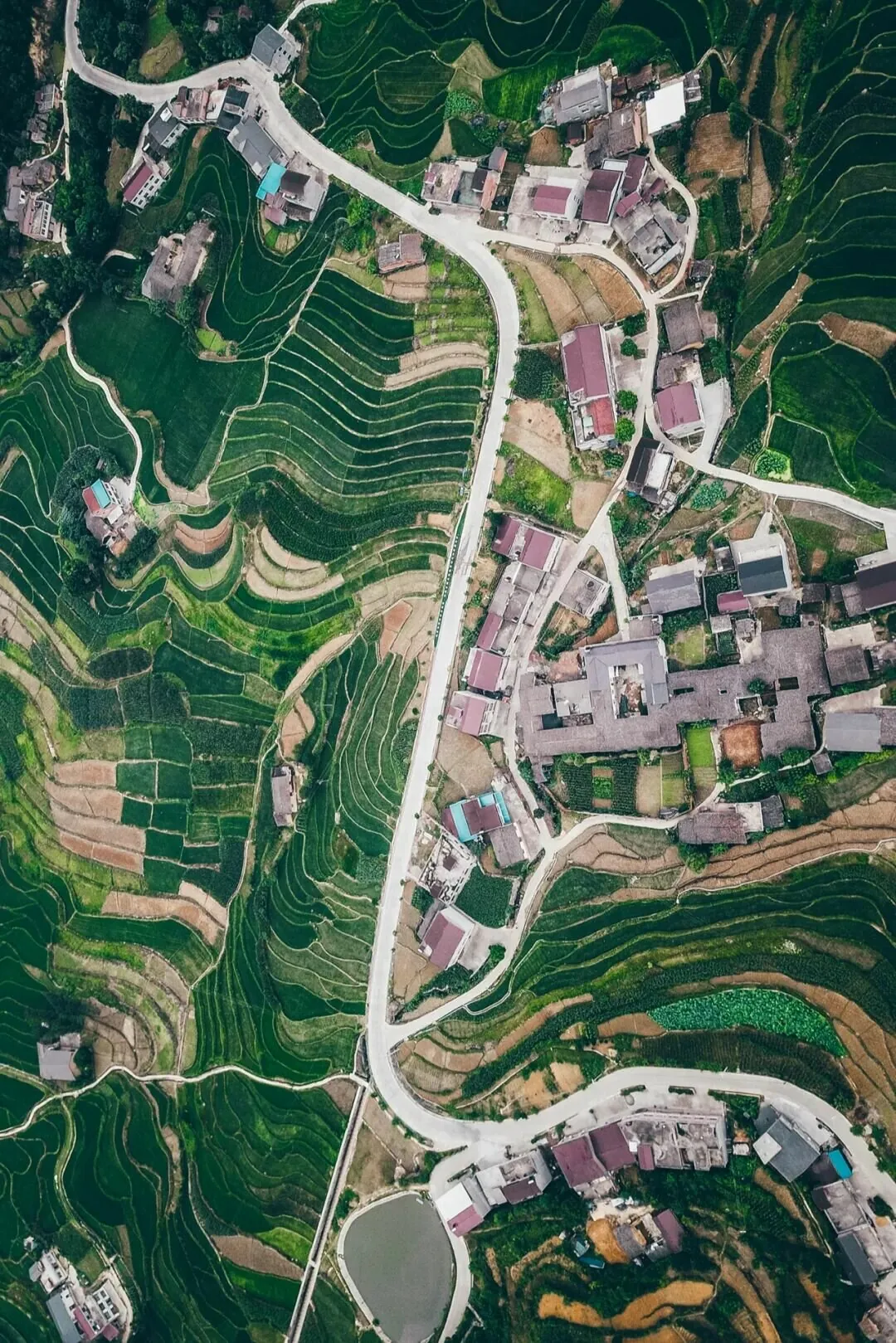
▲ Rice can also be grown deep in the Qinling Mountains. Photo/Hu Wenkai
In North China, the high-quality rice from the suburbs of Beijing gained fame as a tribute a century ago. The Ming Water Fragrant Rice of Zhangqiu, Shandong, has a cultivation history of over 2,000 years and was selected as tribute grain for its excellent quality, earning the reputation of "one household cooking it, the whole village enjoys its fragrance." The Shangzhuang area in Haidian, Beijing, rich in water resources, began rice cultivation early, and Emperor Kangxi of the Qing Dynasty personally selected and bred "Imperial Rice" here. Today, Jingxi Rice is not only famous for its quality but has also developed a rich and diverse rice culture.
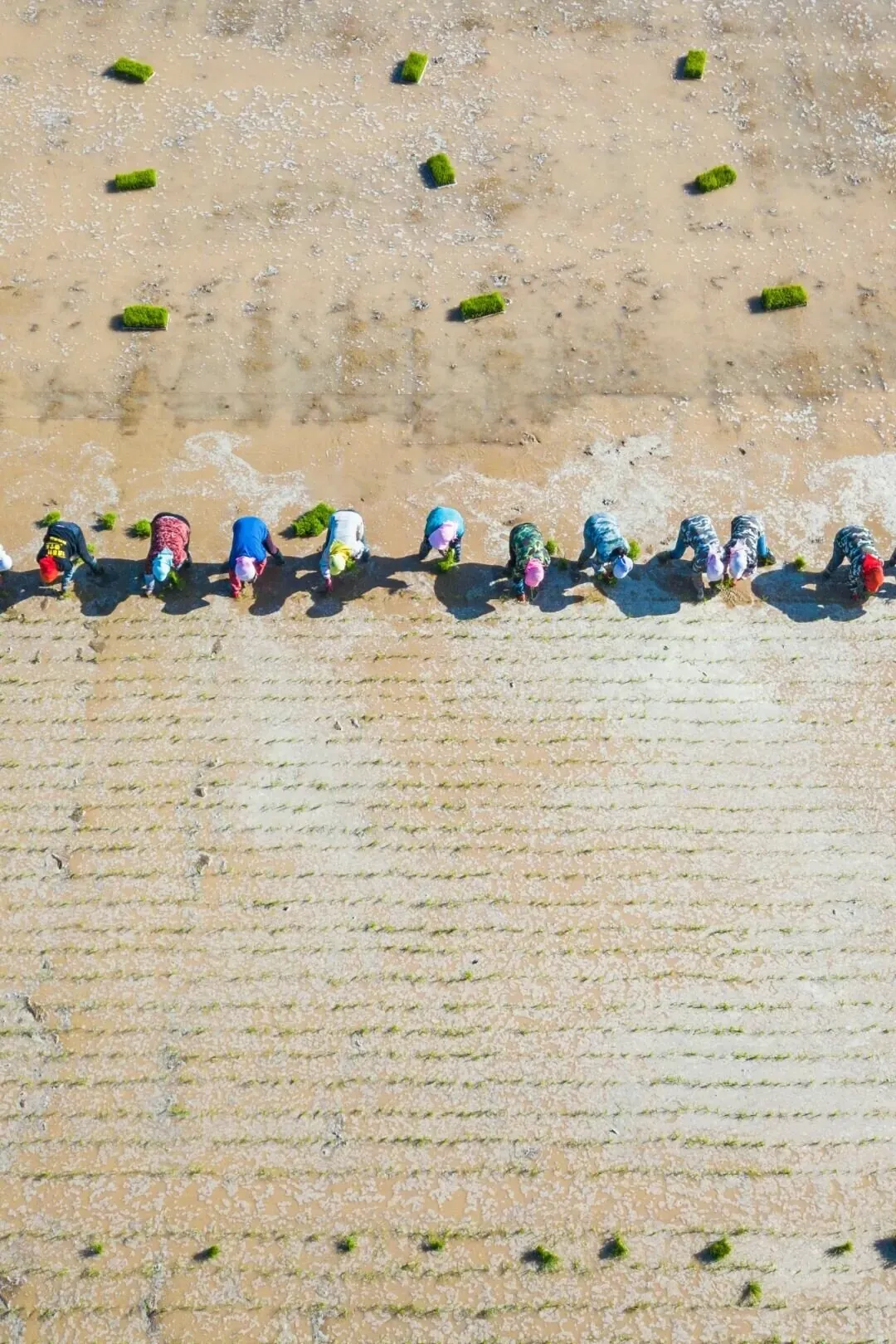
▲ Farmers transplanting rice seedlings in the Yinchuan Plain, Ningxia. Photo/Li Benjian
The Hetao Plain in Inner Mongolia and Ningxia, with its numerous wetlands, has long been hailed as the "Land of Fish and Rice Beyond the Great Wall." The alluvial deposits of the Yellow River provide flat arable land and convenient irrigation. Recent successes in controlling soil salinization have made rice cultivation a new path to prosperity. In 2019, the Hetao Plain achieved a rice harvest with a yield of 1,000 jin per mu.
Even in the arid northwestern plateaus, waves of rice can be seen.
"The Era of Going to Sea": The Transformation of Super Rice
Looking beyond the northern regions and the Yangtze River Basin, from the dammed basins of the Yunnan-Guizhou Plateau to the coastal plains of Taiwan and Hainan, from the Pearl River Delta to the largest plain in Hong Kong, the Yuen Long Plain... in every major regional granary, rice waves now surge, bringing year after year of bountiful harvests.
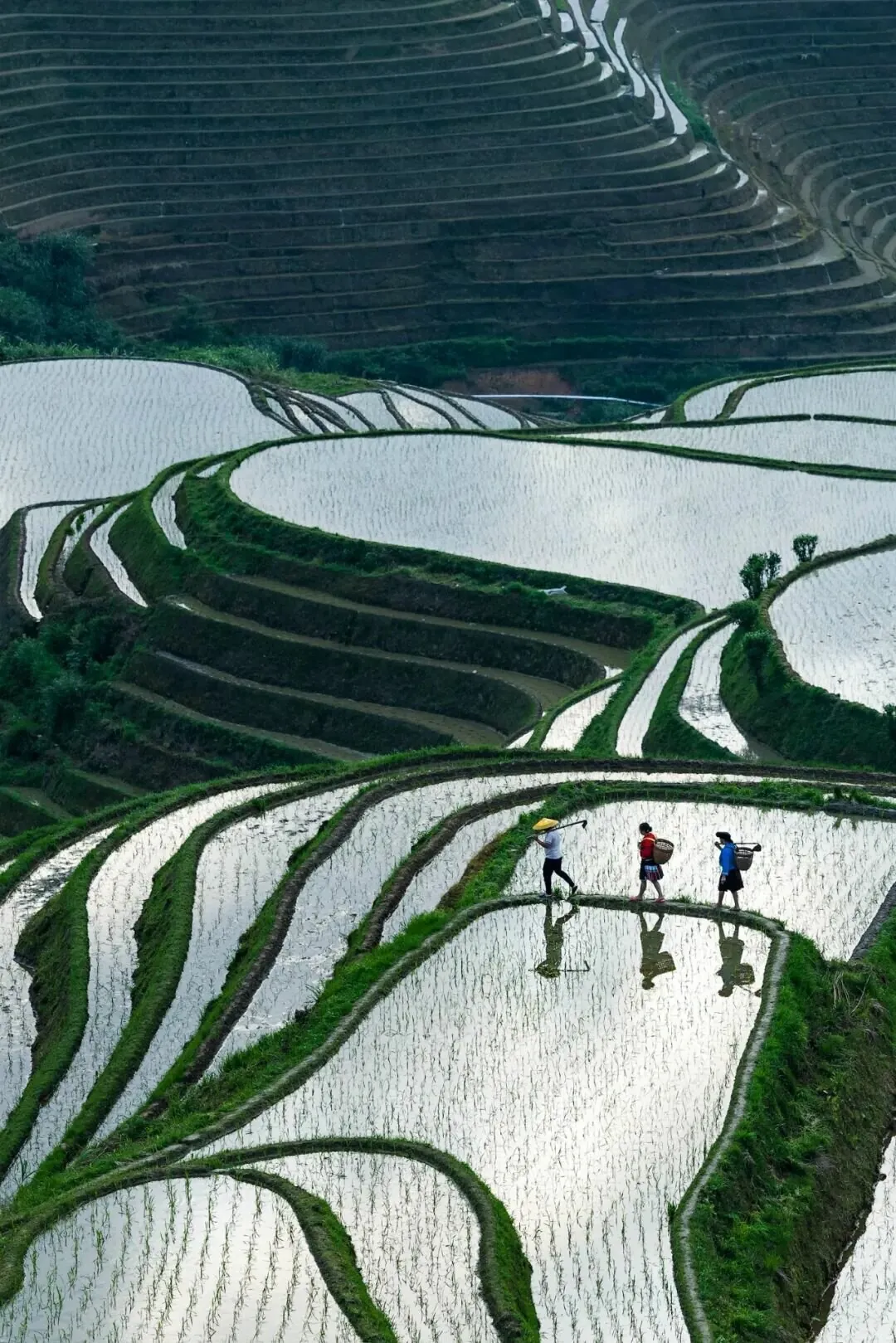
▲ Longji Terraced Fields in Guangxi. Photo/Qiu Xinsheng
To trace the origins of high-quality rice, one must visit China's natural agricultural "greenhouse," which boasts excellent tropical light and temperature resources, ideal natural conditions for producing premium rice, and is surrounded by the sea, offering the best air quality in the country—making it a breeding paradise in the eyes of agricultural researchers—
As the only province entirely located in the tropics, Hainan has been a natural plant laboratory since ancient times.
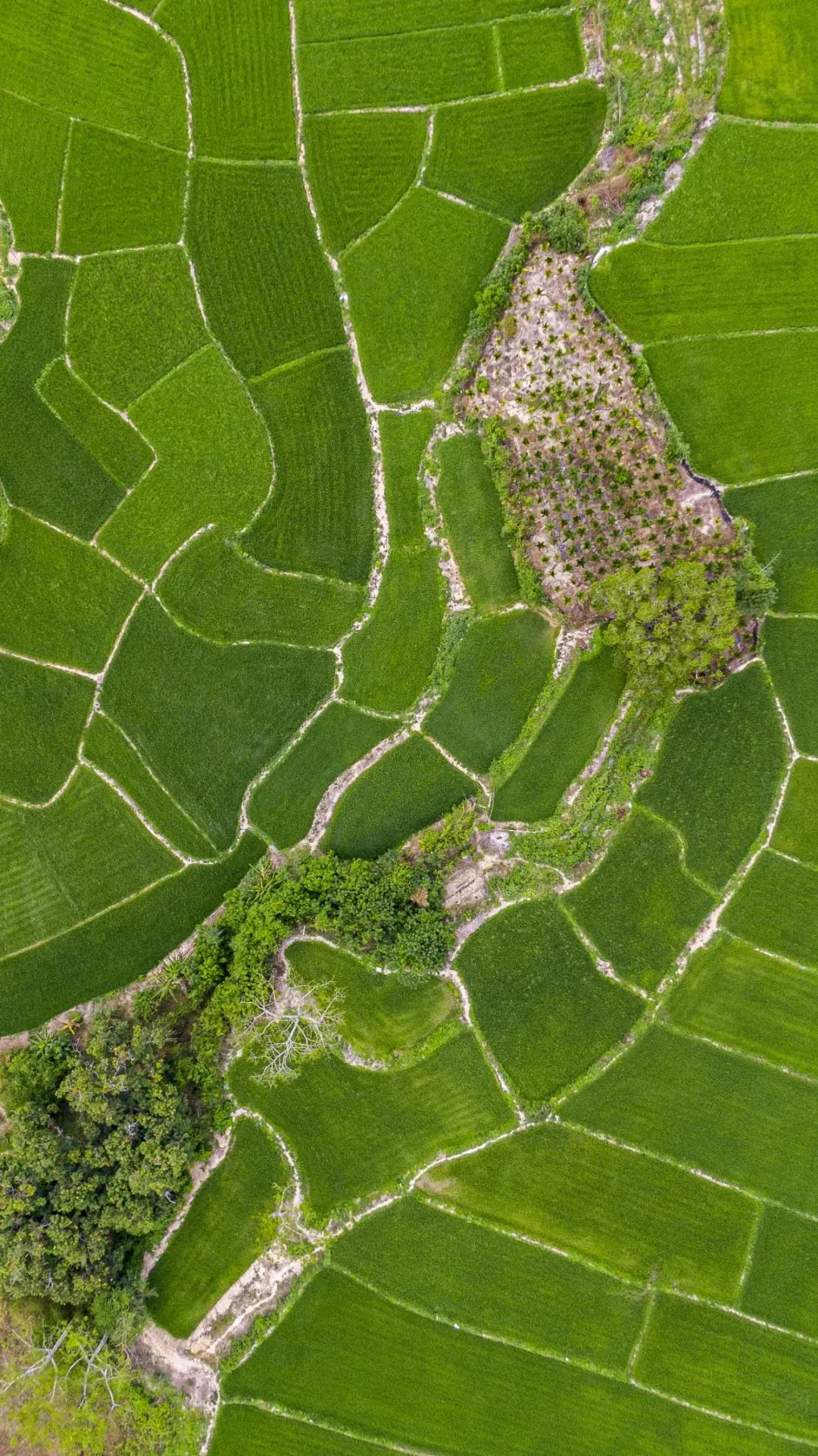
▲ Rice fields in Dongfang City, Hainan. Image/VCG
The breakthrough of hybrid rice, now renowned worldwide, was a male sterile wild rice plant discovered 51 years ago in Hainan by Li Bihu, an assistant of Yuan Longping. In 1976, China began large-scale promotion of hybrid rice, planting 2.08 million mu (about 138,667 hectares) with a general yield increase of over 20%. Since then, the Chinese people have firmly held their rice bowls in their own hands.
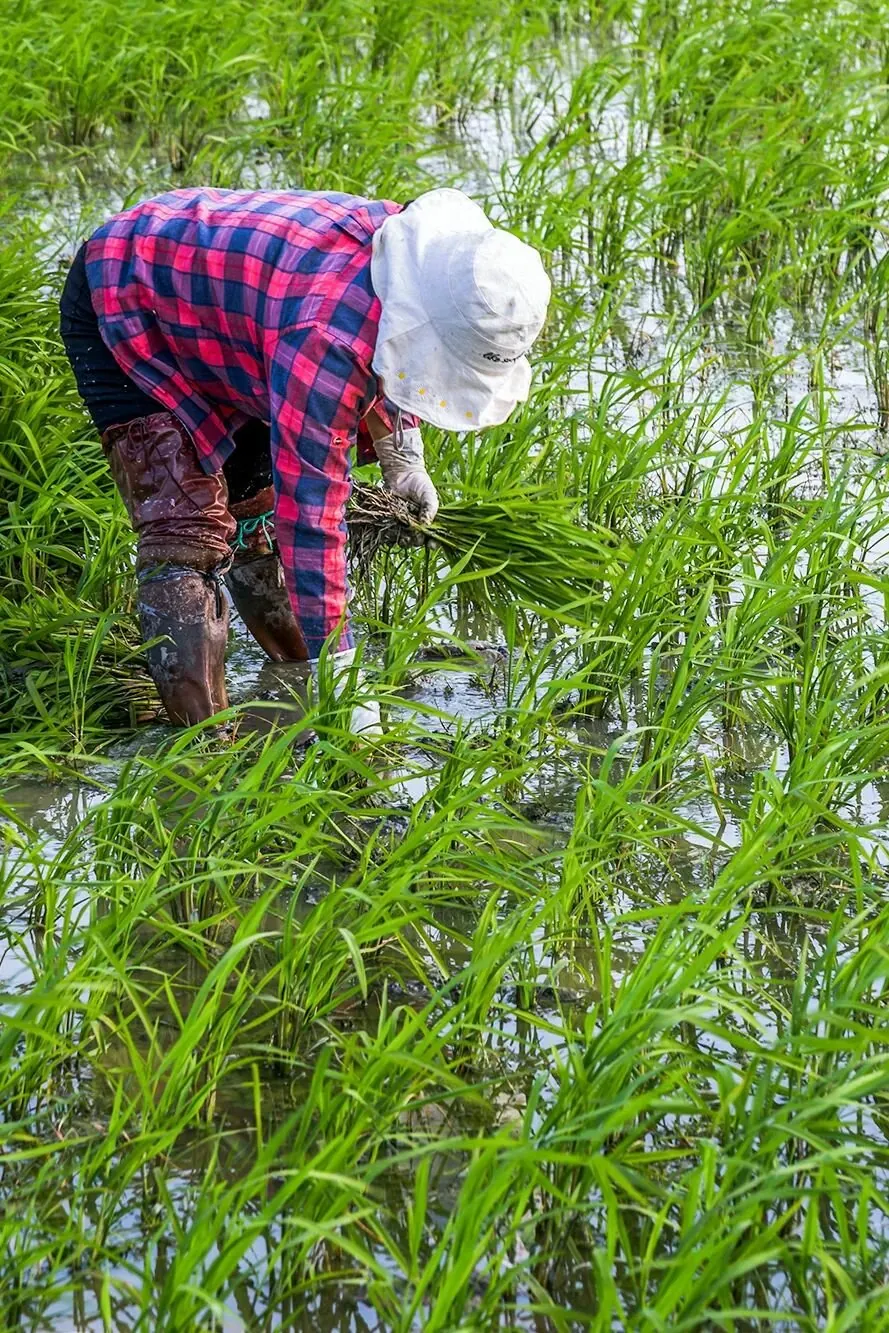
▲ Sanya Yuan Longping Rice Planting Base (Sanya National Rice Park). Photo/He Rong
Located in Hainan, the Nanfan Breeding Base is known as the "Silicon Valley" of China's seed industry. Generations of agricultural researchers, like migratory birds, "migrate" here every winter, working hard to realize the vision of increasing rice yields. On May 10 this year, in Sanya, Hainan, the super hybrid rice developed by Yuan Longping's team achieved an average yield of 1004.83 kilograms per mu. In contrast, during the Qing Dynasty just over a hundred years ago, China's average rice yield per mu was only about one-tenth of this figure.
The question raised by Western scholars last century, "Who will feed China in the next century?" has been resoundingly answered.
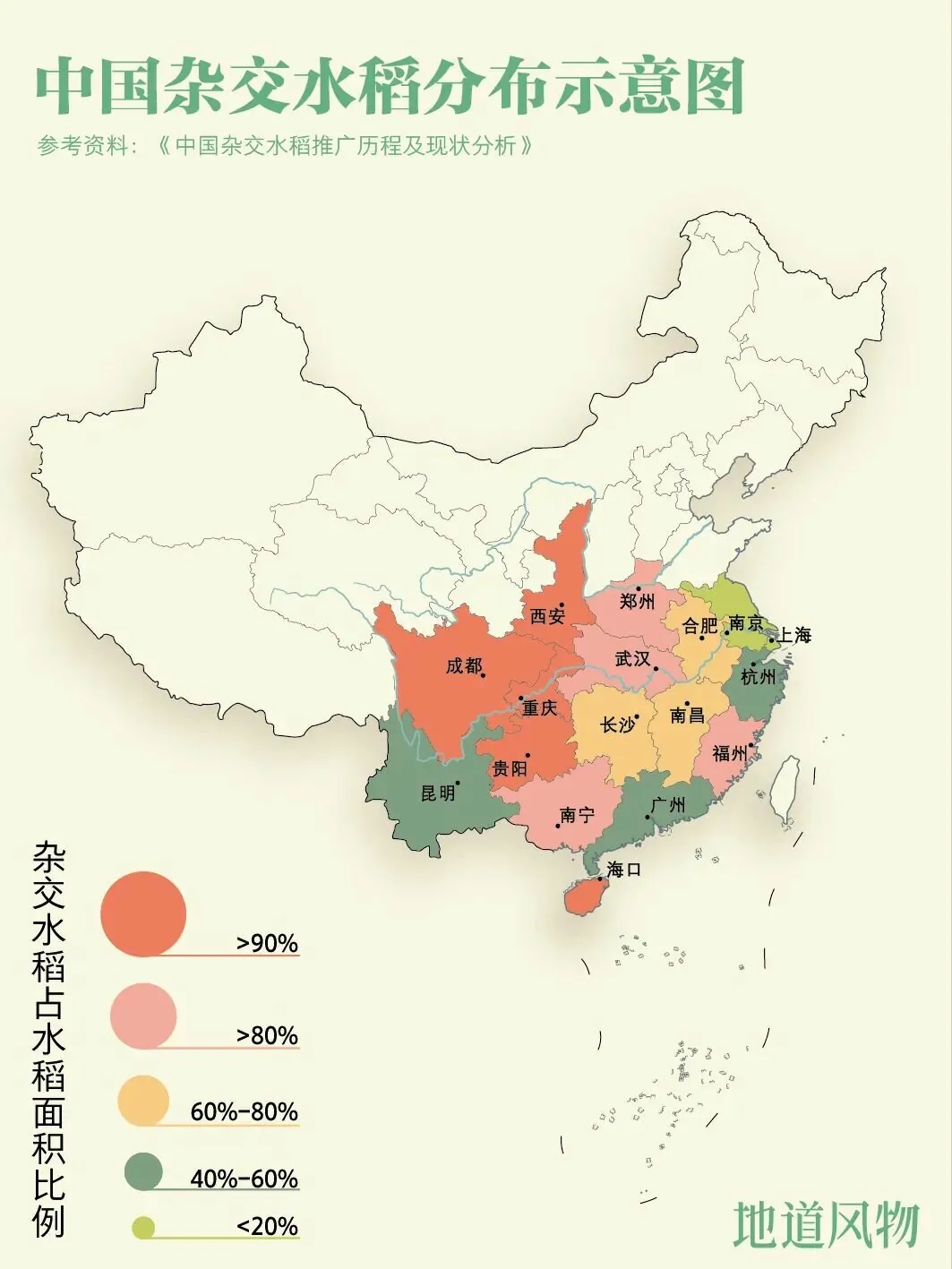
▲ Schematic Map of Hybrid Rice Distribution in China. Map/monk
Such high-quality Chinese hybrid rice has long gone global. In 1979, the United States introduced Chinese hybrid rice, which increased yields by over 165%, earning it the nickname "Oriental Magic Rice." Chinese hybrid rice has since been introduced to over 60 countries, with an annual planting area exceeding 6 million hectares. Madagascar, the largest African cultivator of Chinese hybrid rice, even features rice patterns on its currency. While the Champa rice was once introduced from Vietnam to Jiangnan, today Vietnam imports large quantities of hybrid rice from China...

▲ Madagascar's highest-denomination banknote features hybrid rice.
If hybrid rice allowed the Chinese people to climb the critical step from having enough to eat to eating well, then seawater rice represents humanity's spirit of exploration toward nature.
Seawater rice does not grow in seawater but is a "nickname" for salt-tolerant rice. It can improve the environment and has excellent grain quality. Cultivating seawater rice was also a long-cherished wish of Academician Yuan Longping in his later years. "If seawater rice research succeeds, it will add at least 100 million mu (about 6.67 million hectares) of arable land," and China's tens of millions of mu of saline-alkali land will also be filled with the fragrance of rice flowers.
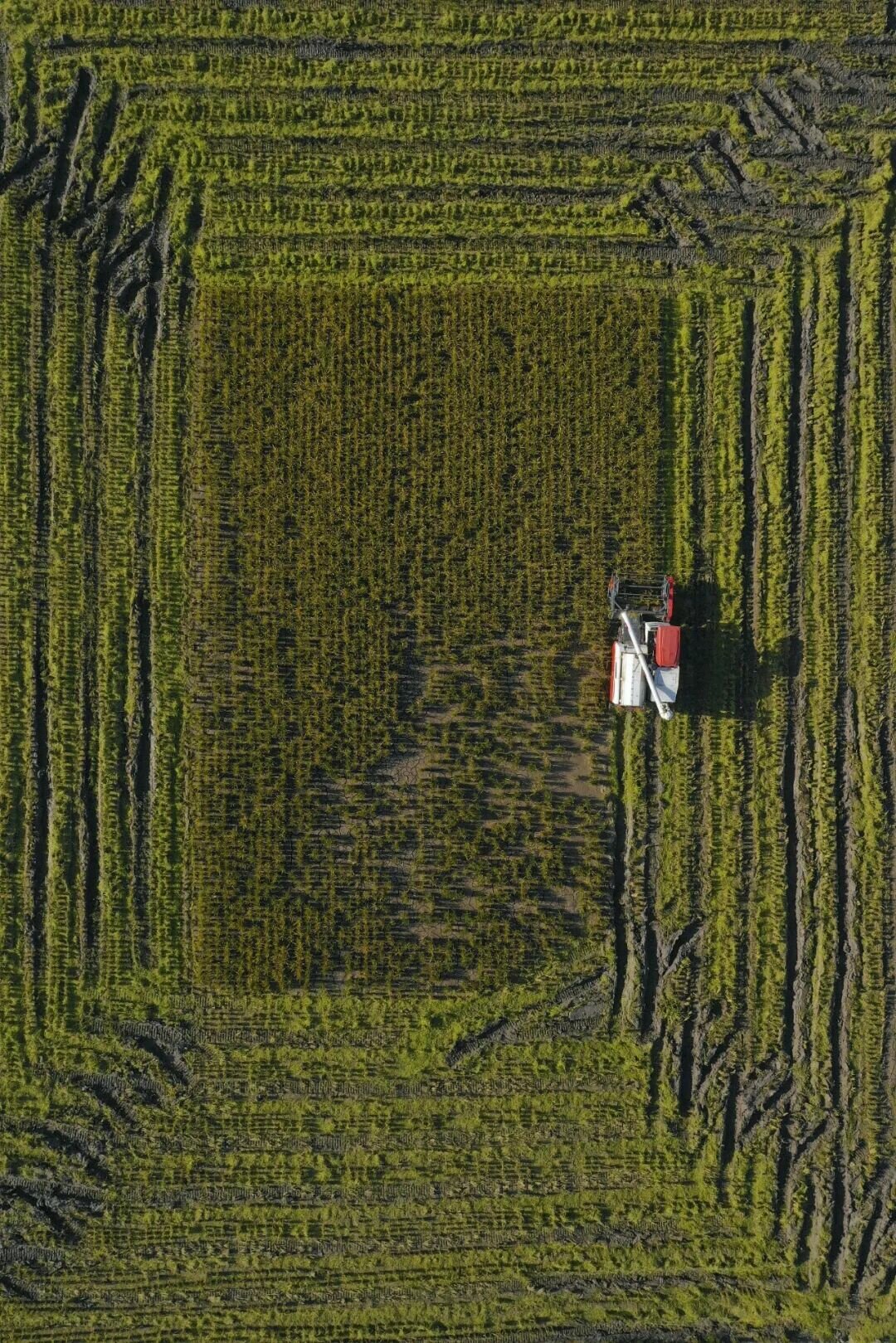
▲ "Seawater rice" ripens in golden autumn in Wenzhou, Zhejiang, with farmers harvesting in the fields. Photo/VCG
In 1986, scientist Chen Risheng discovered a wild seawater rice plant. In 2016, Academician Yuan Longping led the establishment of the Qingdao Seawater Rice Research and Development Center to specialize in salt-tolerant rice research.
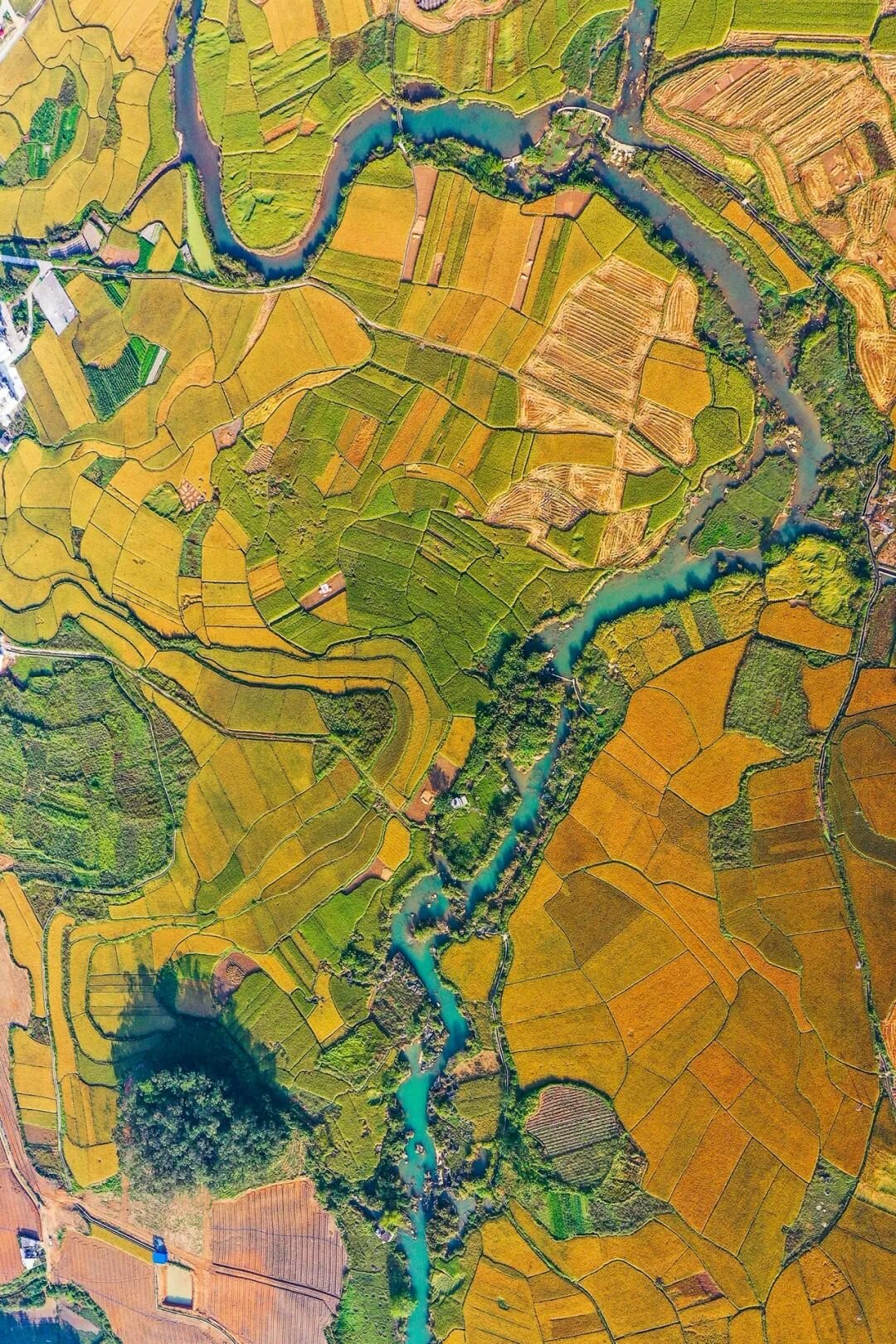
▲ A river meanders through rice fields. Photo/Xiong Ke
From the Yellow River estuary in Dongying, Shandong, to the Qaidam Basin in Qinghai, and as far as the Kashgar region in Xinjiang, Academician Yuan Longping and his team have left patches of lush green seawater rice seedling experimental fields in various types of saline-alkali land. The team even went to the desert areas of Dubai and successfully trial-planted seawater rice.
The adaptability of rice is remarkable. Like ocean waves, rice waves allow even the places farthest from the sea to connect with it.
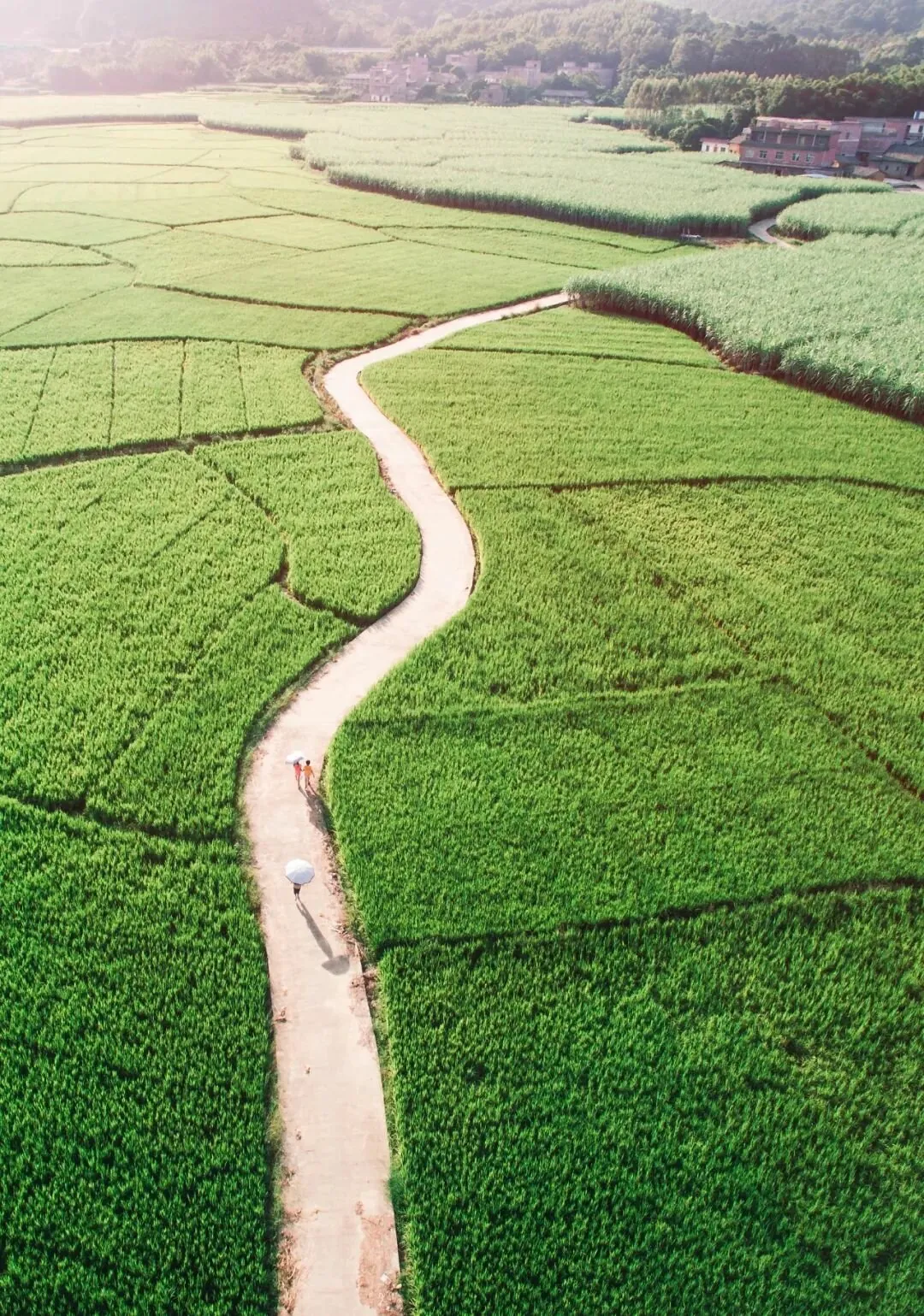
▲ Guigang, Guangxi, with lush rice fields. Photo/Lu Wen
From a resilient "weed" to a super crop yielding a thousand kilograms per mu, rice has a graceful presence like the Yangtze River. It thrives in the black soil of Northeast China, takes root in the magnificent landscapes of China, and ventures into barren lands, expanding the frontiers of human food resources.
"One wish for a world without famine, another for rice plants so tall we can rest in their shade." This epic, originating from an agricultural powerhouse, is so grand and passionate, and it will continue to be sung for generations to come.
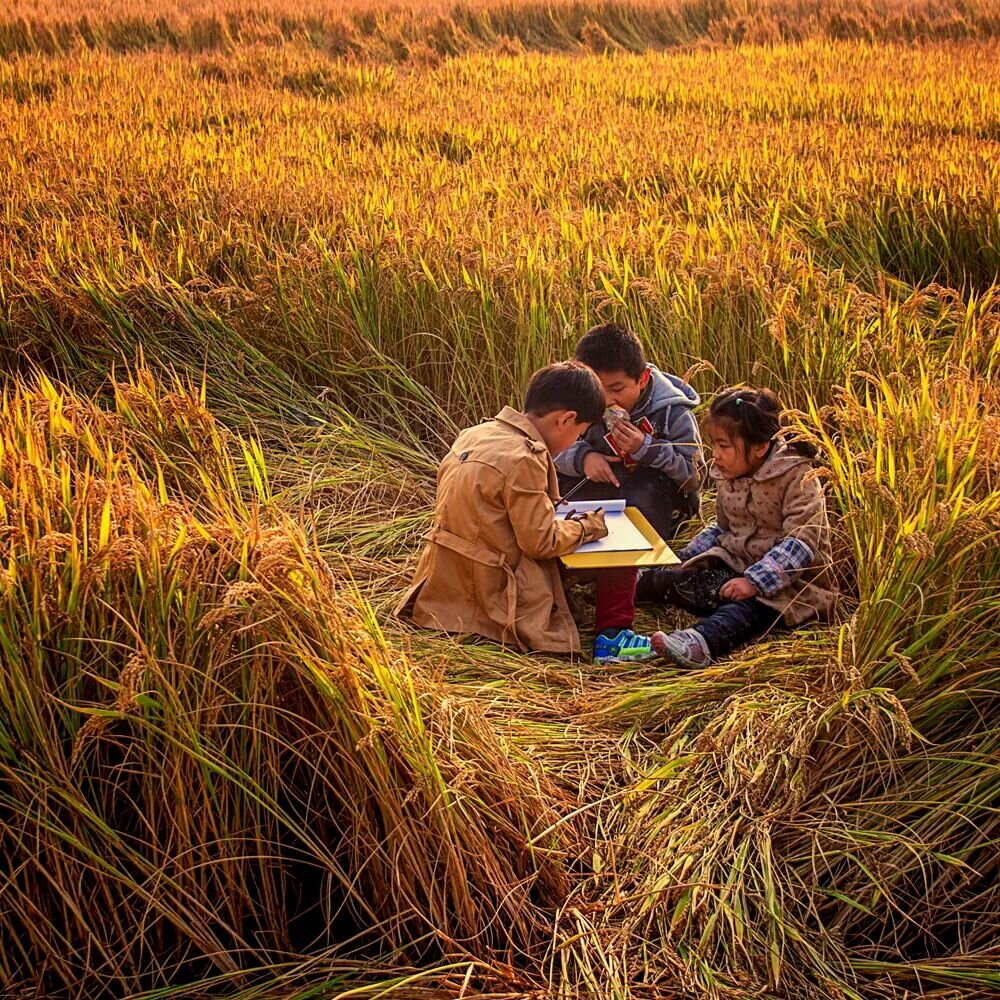
▲ "A person is like a seed; one should strive to be a good seed." Photo/Yang Mo
Image Editors | Naifu, Zhu Mengfei
Hybrid Rice. Engineering, 2020.6
Development Trends and Prospects of the Seawater Rice Industry "Agricultural Outlook" 2020.10
A Brief History of Rice in China, compiled by Yue Yufeng, Shenyang Publishing House, 2019
Analysis of the Promotion Process and Current Status of Hybrid Rice in China, Hybrid Rice, 2016.3
— Click the image below to explore China's culinary delights with Fengwu Jun —
Give a "thumbs-up" for Chinese rice!
🔍 Explore More
What Does Chinese Nostalgia Look Like?
A Year-Round Fruit Fiesta: How This Mega-Province Sweetens China's Four Seasons